

SKU #72063
·
61 views
Eastern
Vigna
User rating
0 votes0% positive reviews
No ratings yet — be the first.
Assignment
Universal
Growth Type
Liana
Bob Length, cm
50
Yield
0.9-1.6
About product

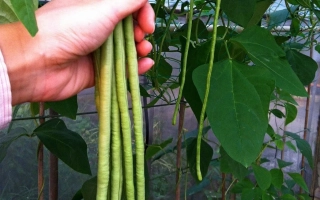
Vigna is a promising vegetable crop widely used in tropical and subtropical regions of the world. Its genus contains from 57 to 200 species, many of which are already included in commercial production and have significant economic importance for the population's nutrition. Key representatives include cowpea (Vigna unguiculata), mung bean or golden bean (Vigna radiata), and mung (Vigna mungo). Thes…
Assignment
Universal
Growth Type
Liana
Bob Length, cm
50
Yield
0.9-1.6
Description
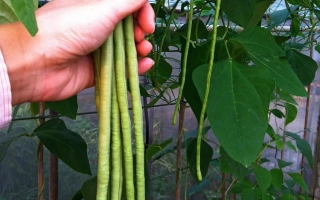
Vigna is a promising vegetable crop widely used in tropical and subtropical regions of the world. Its genus contains from 57 to 200 species, many of which are already included in commercial production and have significant economic importance for the population's nutrition. Key representatives include cowpea (Vigna unguiculata), mung bean or golden bean (Vigna radiata), and mung (Vigna mungo). These species are valued for their high content of protein, vitamins, and minerals, as well as for their ability to grow under high temperatures and poor soils.
Vigna crops differ in versatility: practically all parts of the plant - from young sprouts and leaves to immature green beans and mature seeds - are used for food. This makes it a valuable source of nutrition throughout the growing season. Yields vary from 0.5 to 5 t/ha for grain and from 0.9 to 1.6 t/ha for green beans, which confirms its productivity even under unfavorable conditions.
Vigna varieties have a number of practical advantages. They are low-growing, easily grown after manure and fertilizers, especially potassium and superphosphate. In China, a popular variety has beans 0.5 m long, and on one bush can give more than 3 kg of fruit. In addition to culinary applications, Vigna is traditionally used in folk medicine for the treatment of diabetes, cholecystitis, pancreatitis, anemia, and angina. Auxiliary properties make it a valuable addition both to the diet and to a healthy eating system.
Vigna crops differ in versatility: practically all parts of the plant - from young sprouts and leaves to immature green beans and mature seeds - are used for food. This makes it a valuable source of nutrition throughout the growing season. Yields vary from 0.5 to 5 t/ha for grain and from 0.9 to 1.6 t/ha for green beans, which confirms its productivity even under unfavorable conditions.
Vigna varieties have a number of practical advantages. They are low-growing, easily grown after manure and fertilizers, especially potassium and superphosphate. In China, a popular variety has beans 0.5 m long, and on one bush can give more than 3 kg of fruit. In addition to culinary applications, Vigna is traditionally used in folk medicine for the treatment of diabetes, cholecystitis, pancreatitis, anemia, and angina. Auxiliary properties make it a valuable addition both to the diet and to a healthy eating system.
Specifications hover over for a hint about the specification
| Assignment | |
|---|---|
| Growth Type | |
| Bob Length, cm | 50 |
|
Yield
Yield
Overall bulb harvest per unit area. Depends on both onion variety characteristics and agronomic practices, fertilizers, and irrigation. Under optimal growing conditions, an onion yield of 100 tons per hectare and above is not considered record-breaking. |
0.9-1.6 |
| Registration year | 2021 |
| Catalog | Catalog → Vigna |
| Legal data |
Show · 1 |
| Country | Russia |
Store offers
Prices are updated on loadLoading offers…
Aggregator catalog: prices are collected automatically from store websites, normalized by AI and converted at the current exchange rate. Before ordering, confirm the price and availability on the store's website. This block is not indexed by search engines — the data is loaded after the page opens.
Not yet комментариев. Be the first!
See also
Often considered together with this variety





Recently viewed
Products you’ve viewed on this site
Reviews · 0