


SKU #64485
·
55 views
KUIRIDA
Vegetable Pea
Van Waveren Saaten GmbHUser rating
0 votes0% positive reviews
No ratings yet — be the first.
Growing Season
60-70 days
Bean Size
Large-seeded
Straw; shape
Dumb
Straw; length
8-9 cm, 9-10 cm
About product

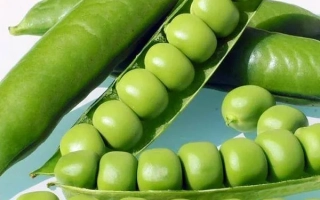
A high-yielding large-seeded German variety with stable performance and 7-8 seeds per pod.
Growing Season
60-70 days
Bean Size
Large-seeded
Straw; shape
Dumb
Straw; length
8-9 cm, 9-10 cm
Description
Technological Efficiency of 'Kuirida' Pea
The German breeding program from Van Waveren Saaten focuses on bridging the gap between early maturity and high yields. The 'Kuirida' variety is a professional tool for intensive vegetable farming, where consistency in pod sizing and seed development is paramount for market-ready produce.
Biological Specifications and Performance
With a vegetation period of 60–70 days, this variety fits into a medium-early crop rotation, allowing for precise scheduling for the fresh market. Its architectural design is optimized for yield efficiency:
- Pod Morphology: The 8–10 cm length combined with a blunt tip shape facilitates both manual and mechanized harvesting, reducing mechanical damage to the seeds.
- Pod Capacity: A consistent count of 7–8 large seeds per pod ensures high marketable weight and uniform grain size.
The large-seeded nature of 'Kuirida' demands optimal moisture management during the seed-filling phase. By leveraging the specific genetics provided by Van Waveren Saaten, growers can achieve not only volume but also the premium taste profile synonymous with German agricultural standards. This variety is an effective choice for operations that prioritize high yield returns per hectare.
Specifications
| Growing Season | 60-70 days |
|---|---|
| Bean Size | |
| Straw; shape | |
| Straw; length | 8-9 cm, 9-10 cm |
| String; number of seeds | 7-8 pcs |
| Registration year | 2021 |
| Catalog | Catalog → Vegetable Pea |
| Manufacturer | Van Waveren Saaten GmbH |
| Country | Germany |
Store offers
Prices are updated on loadLoading offers…
Aggregator catalog: prices are collected automatically from store websites, normalized by AI and converted at the current exchange rate. Before ordering, confirm the price and availability on the store's website. This block is not indexed by search engines — the data is loaded after the page opens.
Not yet комментариев. Be the first!
Alternatives
Garden pea seeds · similar varieties




See also
Often considered together with this variety




Recently viewed
Products you’ve viewed on this site
Reviews · 0