

SKU #47094
·
60 views
Amur
Triticale
User rating
0 votes0% positive reviews
No ratings yet — be the first.
Type
Winter triticale
Plant Height
100-110 cm
Registration year
2010
About product

The winter triticale variety Amur is recommended for cultivation in various regions, including the Steppe, Forest-Steppe, and Polissia. This variety is distinguished by high yield potential up to 96.3 centners per hectare, while in real conditions it consistently provides yields in the range of 65–80 centners per hectare. Amur is a medium-maturing variety, characterized by good winter hardiness an…
Type
Winter triticale
Plant Height
100-110 cm
Registration year
2010
Description
The winter triticale variety Amur is recommended for cultivation in various regions, including the Steppe, Forest-Steppe, and Polissia. This variety is distinguished by high yield potential up to 96.3 centners per hectare, while in real conditions it consistently provides yields in the range of 65–80 centners per hectare. Amur is a medium-maturing variety, characterized by good winter hardiness and high drought resistance, rated at 9 points. In addition, it is resistant to lodging and grain shattering, and immune to fungal diseases, making it a reliable choice for intensive farming on high-mineral soils.
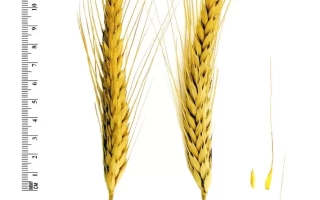
The grain of triticale Amur has a 1000-grain weight within 55–60 g and contains 13–15% protein with lysine at 0.45–0.50%. This nutritional value makes it suitable for bakery industry, especially for rye bread production. In addition, the grain is used for feed purposes by farmers and is suitable for use in the alcohol industry. Visually, the variety more closely resembles winter wheat than rye, forming a medium-height plant (100–110 cm) with a white cylindrical ear covered with medium awns. Thanks to good lateral stem development, the plant forms a strong stem mass.
Agronomic requirements for the variety include adherence to optimal sowing dates, recommended in the Forest-Steppe region from September 25 to October 5, as well as proper application of mineral fertilizers and seeding rates. The variety was registered in 2010 and developed by the Myronov Institute of Wheat named after V.M. Remesla of the Ukrainian Academy of Agricultural Sciences. All these characteristics make Amur a versatile and highly effective triticale variety for various climatic conditions in Ukraine.
The grain of triticale Amur has a 1000-grain weight within 55–60 g and contains 13–15% protein with lysine at 0.45–0.50%. This nutritional value makes it suitable for bakery industry, especially for rye bread production. In addition, the grain is used for feed purposes by farmers and is suitable for use in the alcohol industry. Visually, the variety more closely resembles winter wheat than rye, forming a medium-height plant (100–110 cm) with a white cylindrical ear covered with medium awns. Thanks to good lateral stem development, the plant forms a strong stem mass.
Agronomic requirements for the variety include adherence to optimal sowing dates, recommended in the Forest-Steppe region from September 25 to October 5, as well as proper application of mineral fertilizers and seeding rates. The variety was registered in 2010 and developed by the Myronov Institute of Wheat named after V.M. Remesla of the Ukrainian Academy of Agricultural Sciences. All these characteristics make Amur a versatile and highly effective triticale variety for various climatic conditions in Ukraine.
Specifications hover over for a hint about the specification
|
Type
Type
Galia (Galia) type — relatively new, of Israeli origin, although there are indications that this variety may originate from Spain. The fruits of this type are round or oval, weighing about 1 kg. The surface is smooth, covered with a delicate, connected netting, turning yellow whe... |
|
|---|---|
| Plant Height | 100-110 cm |
| Registration year | 2010 |
| Catalog | Catalog → Triticale |
| Legal data |
Show · 1
|
| Country | Ukraine |
Store offers
Prices are updated on loadLoading offers…
Aggregator catalog: prices are collected automatically from store websites, normalized by AI and converted at the current exchange rate. Before ordering, confirm the price and availability on the store's website. This block is not indexed by search engines — the data is loaded after the page opens.
Not yet комментариев. Be the first!
Alternatives
Triticale seeds · similar varieties




See also
Often considered together with this variety




Recently viewed
Products you’ve viewed on this site
Reviews · 0