


SKU #51527
·
36 views
Sapporo
Tomato
User rating
0 votes0% positive reviews
No ratings yet — be the first.
Product Type
Seeds; Seed material
Plant Type
Indeterminate
Maturation Period
90-100 days
Fruit Weight
Up to 20 grams
About product

Tomato Sapporo is an early-maturing, tall hybrid with a period from germination to fruiting of 95-102 days. The plant is indeterminate, reaching a height of over 200 cm, has closely spaced internodes, and is well-leafed. Due to its high adaptability, the hybrid grows successfully both in plastic greenhouses and in open ground with mandatory support on stakes. The recommended planting scheme is 40x…
Product Type
Seeds; Seed material
Plant Type
Indeterminate
Maturation Period
90-100 days
Fruit Weight
Up to 20 grams
Description
Tomato Sapporo is an early-maturing, tall hybrid with a period from germination to fruiting of 95-102 days. The plant is indeterminate, reaching a height of over 200 cm, has closely spaced internodes, and is well-leafed. Due to its high adaptability, the hybrid grows successfully both in plastic greenhouses and in open ground with mandatory support on stakes. The recommended planting scheme is 40x60 cm, which promotes optimal growth and yield.
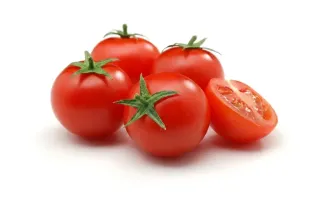
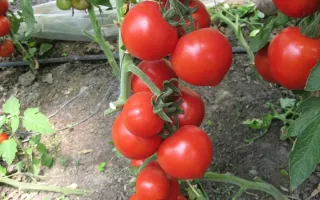
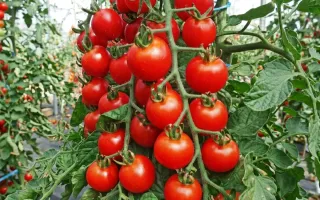
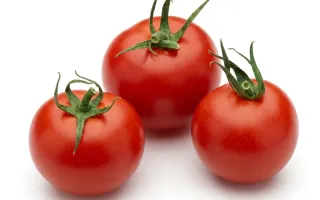
The fruits of tomato Sapporo have a round shape and an average weight of about 20 grams. At the beginning of ripening, they are uniformly green, and as they mature, they acquire a bright, saturated red color with a shiny skin. The fruits are dense, with a tender sweet flavor and increased sugar content, making them especially attractive to children and adults. The yield forms in long, attractive clusters with numerous fruits of uniform size, which can be harvested whole. After harvest, the fruits retain their flavor and attractive appearance for a long time.
The hybrid exhibits high resistance to major tomato diseases, including tobacco mosaic virus (ToMV), fusarium wilt (Fol), verticillium wilt (Va, Vd), fusarium rot (Ff), as well as nematodes (Ma, Mi, Mj). Thanks to these characteristics and high technological suitability, tomato Sapporo is widely used for fresh consumption, buffet and snack presentation, canning, and preparation of vegetable assortments.
The fruits of tomato Sapporo have a round shape and an average weight of about 20 grams. At the beginning of ripening, they are uniformly green, and as they mature, they acquire a bright, saturated red color with a shiny skin. The fruits are dense, with a tender sweet flavor and increased sugar content, making them especially attractive to children and adults. The yield forms in long, attractive clusters with numerous fruits of uniform size, which can be harvested whole. After harvest, the fruits retain their flavor and attractive appearance for a long time.
The hybrid exhibits high resistance to major tomato diseases, including tobacco mosaic virus (ToMV), fusarium wilt (Fol), verticillium wilt (Va, Vd), fusarium rot (Ff), as well as nematodes (Ma, Mi, Mj). Thanks to these characteristics and high technological suitability, tomato Sapporo is widely used for fresh consumption, buffet and snack presentation, canning, and preparation of vegetable assortments.
Crop & resistance
Crop
Disease resistance
Pest resistance
Specifications hover over for a hint about the specification
| Product Type | |
|---|---|
| Plant Type | |
|
Maturation Period
Maturation Period
Vegetation period from emergence to technical maturity 30-50 days. |
90-100 days |
|
Fruit Weight
Fruit Weight
Tomato fruits are classified by weight as: very small — less than 20 grams; small — 20 — 50 grams; medium — 50 — 100 grams; large — 100 — 200 grams; very large — more than 200 grams. |
Up to 20 grams |
|
Fruit Shape
Fruit Shape
Modern tomato varieties have a diverse fruit shape: flat, flat-round, round, oval, elongated-oval, pear-shaped, plum-shaped, cube-shaped, and cylindrical. On poorly fertile soils and under unfavorable growing conditions, tomato fruits may take on a more rounded shape. |
|
|
Fruit Color
Fruit Color
The fruit color of tomato varieties is influenced by the combination of skin and flesh color. Some varieties have transparent skin, others — yellow. When combined differently, the fruits can acquire quite diverse colors. The fruit color is affected by pigments (lycopene) and thei... |
|
| Registration year | 2008 |
| Catalog | Catalog → Tomato |
| Legal data |
Show · 12
|
| Country | Russia |
Store offers
Prices are updated on loadLoading offers…
Available at: АгроОпт
Aggregator catalog: prices are collected automatically from store websites, normalized by AI and converted at the current exchange rate. Before ordering, confirm the price and availability on the store's website. This block is not indexed by search engines — the data is loaded after the page opens.
Not yet комментариев. Be the first!
Alternatives
Tomato seeds · similar varieties





See also
Often considered together with this variety






Recently viewed
Products you’ve viewed on this site
Reviews · 0