


SKU #49504
·
37 views
BUGENWEL
Tomato
OOO `GRINOMIKA`User rating
0 votes0% positive reviews
No ratings yet — be the first.
Plant Type
Perennial
Product Type
Seeds; Seed material
Registration year
2022
About product

A reliable choice for those who value predictable germination and high crop adaptability.
Plant Type
Perennial
Product Type
Seeds; Seed material
Registration year
2022
Description
Stability and Predictability in the Greenhouse
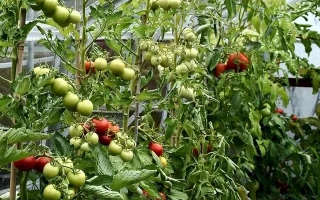
When choosing planting material from LLC "Grinomika," it is crucial to understand what you will face throughout the season. The "Bugenvel" tomato is a case where the originator, Greenomica, focused on endurance and predictable plant behavior. In practice, this simplifies maintenance: less time is spent on "treating" the crop and more on proper bush formation.
Agronomic Features
- Plant type: Perennial. This imposes certain obligations regarding temperature control and light levels within the greenhouse.
- Efficiency: As an operator, I would highlight the high degree of adaptability to humidity fluctuations, which is critical in regions with unstable climates.
- Formation: The variety requires systematic work with suckers. If neglected, the density of the foliage significantly reduces ventilation, increasing the risk of fungal diseases.
Maintenance and Seed Consumption
The seed material from LLC "Grinomika" is characterized by high germination energy. With proper substrate preparation and adherence to planting depth, germination is consistently high, allowing for accurate calculation of trays and seedling area capacity. Seed consumption is minimal, as the selection process ensures high vitality for every seed.
The "repairability" of "Bugenvel" in an agronomic context is its ability to recover quickly from stress, whether it be short-term drought or temporary temperature drops. This makes it an excellent choice for those who are not ready to experiment with temperamental hybrids and are looking for a reliable tool to achieve consistent results.
Crop & resistance
Crop
Specifications
| Plant Type | |
|---|---|
| Product Type | |
| Registration year | 2022 |
| Catalog | Catalog → Tomato |
| Manufacturer | OOO `GRINOMIKA` |
| Legal data |
Show · 1
|
| Country | Russia |
Store offers
Prices are updated on loadLoading offers…
Aggregator catalog: prices are collected automatically from store websites, normalized by AI and converted at the current exchange rate. Before ordering, confirm the price and availability on the store's website. This block is not indexed by search engines — the data is loaded after the page opens.
Not yet комментариев. Be the first!
Alternatives
Tomato seeds · similar varieties


See also
Often considered together with this variety





Recently viewed
Products you’ve viewed on this site
Reviews · 0