
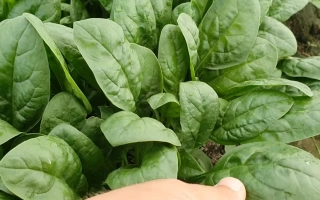


Leaf Color
Dark Green
Registration year
2015
Your mark
0 votes
0% positive ratings
Store offers · 1 from 1 store
1 offer in 1 store — from 0.31 € per 1000 seeds.
Available at: Pivonia
Prices are collected automatically from store websites and converted at the current exchange rate. Check the price and availability on the store website before ordering.
Description
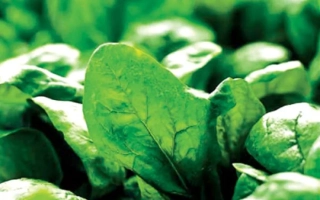
Rembrandt Spinach F1 is a mid-early universal hybrid developed by the Dutch company Bejo Zaden. The plant's vegetative period is approximately 56–58 days. The hybrid is characterized by forming a neat, slightly raised rosette about 20 cm tall with smooth, oval leaves of deep green color. Rembrandt F1 is valued for its high-quality greens, resistance to bolting, and late flowering, which allows leaves to be used longer in cooking. This variety is suitable for growing both in open ground in spring and autumn, as well as in protected conditions, including containers on balconies, ensuring the possibility of obtaining fresh greens year-round. Rembrandt F1 has high cold tolerance: seeds begin to germinate at temperatures as low as 4–5 °C, enabling early spring and even winter sowing. The plant tolerates temperature stress well but dislikes hot weather. For successful cultivation, it is recommended to choose nutrient-rich soils, preferably loamy or sandy, with regular watering. Optimal sowing periods are from early May to late June, with seeds planted at a depth of 1.0–1.5 cm at a rate of 4–5 g per square meter. It is recommended to sow in rows with a spacing of 20–25 cm between rows. After emergence, thinning and soil loosening must be performed, along with weed removal and fertilization to maintain high yields. Rembrandt F1 spinach greens are widely used in home cooking for preparing fresh salads, beverages, and various dishes. Leaves can be frozen for long-term storage or packaged in vacuum-sealed bags. Due to resistance to downy mildew and other adverse factors, this hybrid is suitable for cultivation in various regions, ensuring a stable and high-quality harvest.
Crop & resistance
Disease resistance
Specifications
| Leaf Color | |
|---|---|
| Registration year | 2015 |
| Catalog | Catalog → Spinach |
| Manufacturer | Bejo |
| Legal data |
Show · 3
|
| Country | Netherlands |
No reviews yet. Be the first to share your experience.
Alternatives
Spinach seeds · similar varieties




See also
Often considered together with this variety




Recently viewed
Products you’ve viewed on this site
Reviews