


SKU #46569
·
63 views
Yarona
Sorghum
User rating
0 votes0% positive reviews
No ratings yet — be the first.
Direction
Grain, Hay
Vegetation Period
120-130 days
Plant; height
90-100cm
Registration year
2019
Store offers · 1 from 1 stores
Prices are updated on loadLoading offers…
Available at: Agromen
Aggregator catalog: prices are collected automatically from store websites, normalized by AI and converted at the current exchange rate. Before ordering, confirm the price and availability on the store's website. This block is not indexed by search engines — the data is loaded after the page opens.
About product

A compact, high-efficiency sorghum variety designed for easy harvesting and dual-use flexibility.
Direction
Grain, Hay
Vegetation Period
120-130 days
Plant; height
90-100cm
Registration year
2019
Description
Efficient grain and forage production with Yarona sorghum
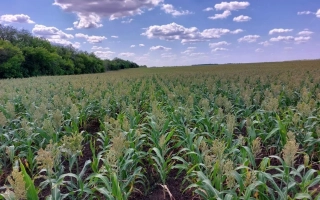
Yarona sorghum, developed by the Institute of Grain Crops of the NAAS, is engineered for operational efficiency. The standout feature is its plant height, ranging from 90 to 100 cm. For an operator, this is a major advantage: it significantly simplifies the harvesting process. With this height profile, combine harvesters operate with higher speed and lower header strain, resulting in minimal grain loss and reduced mechanical wear compared to taller hybrids.
Field performance and maintenance
With a vegetation period of 120-130 days, Yarona allows for precise fleet management. The crop shows excellent uniformity, ensuring that the combine settings remain consistent across the entire field. This predictability is key to maintaining a steady throughput during harvest time. Since the stems are resistant to lodging, you won't face the common problem of harvesting machines getting clogged with tangled biomass or rotting debris.
- Dual-purpose utility: Yarona is equally effective for grain production and hay harvesting. This allows you to repurpose your haying equipment if market conditions shift, maximizing the return on your machinery investment.
- Operational ease: The height of the plant ensures that the ratio of grain to stalk is ideal for harvesting, meaning lower fuel consumption per hectare and less strain on the threshing mechanism.
- Predictable cultivation: The variety responds well to standard fertilization protocols. There is no need for complex, proprietary chemical regimes; Yarona fits seamlessly into existing local farming practices.
If you are looking for a reliable, domestically developed crop that minimizes downtime and simplifies mechanical tasks, Yarona is a solid choice. It delivers a consistent yield with minimal frustration, allowing you to focus on productivity rather than equipment adjustments.
Crop & resistance
Crop
Specifications hover over for a hint about the specification
|
Direction
Direction
Existing varieties and types of cabbage are grown for fresh consumption, long-term storage, and technical processing. |
|
|---|---|
| Vegetation Period | 120-130 days |
| Plant; height | 90-100cm |
| Registration year | 2019 |
| Catalog | Catalog → Sorghum |
| Legal data |
Show · 1
|
| Country | Ukraine |
Not yet комментариев. Be the first!
Alternatives
Sorghum seeds · similar varieties






See also
Often considered together with this variety




Recently viewed
Products you’ve viewed on this site
Reviews · 0