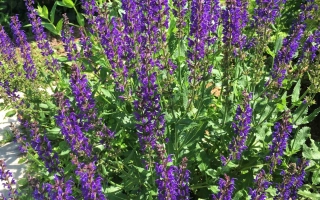
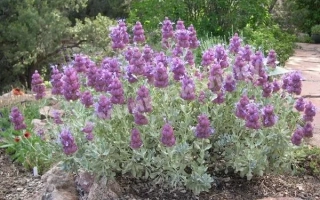
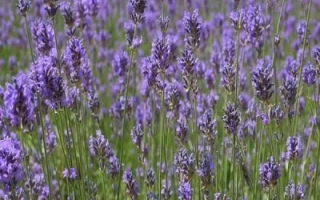
Sage Dobrynia – a perennial medicinal sage variety belonging to the species *Salvia officinalis*. The plant is medium-sized, reaching a height of 40–55 cm, and has a branched bush with an upright stem that becomes woody at the base. The bushes are well-leafed, with opposite, elongated, green, and aromatic leaves.
Flowering begins in June and continues until the end of July. The inflorescences are spike-shaped, large, and consist of small purple flowers, creating a bright decorative effect in flower beds and garden rows. The flowering period is June–August, and the height of the adult plant can reach 60 cm.
Sage Dobrynia is distinguished by its high yield of green mass: from 0.2 to 0.3 kg/m² (200–300 g/m²). The essential oil content is about 2.8%. Thanks to this, the plant is widely used in cooking as a fragrant spice for salads and dishes made from meat, poultry, and fish; it is also used by confectioners, winemakers, and perfumers. In folk medicine, sage leaves are used as a therapeutic remedy.
Care for the plant is simple: it prefers sunny places but does not tolerate direct sunlight in the shade; the soil should be clayey, drained, and alkaline. Young plants are watered every 7–10 days, and adults are watered moderately. Sage Dobrynia is resistant to diseases and pests, but excessive watering can lead to root rot.
The variety is winter-hardy down to -10 °C, but in cold climatic conditions, it is recommended to cover the soil for winter. Due to its decorative nature, aroma, and beneficial properties, Sage Dobrynia is a valuable plant for gardening, as well as for cooking and pharmaceuticals.