

SKU #72427
·
66 views
Kubanets
Sage
ВИЛАРUser rating
0 votes0% positive reviews
No ratings yet — be the first.
Medicinal Plants
Sage
Assignment
Medicinal, Aromatic, Decorative
Leaf Color
Grey-green
Registration year
2003
Store offers · 1 from 1 stores
Prices are updated on loadLoading offers…
Available at: Сади Буковини
Aggregator catalog: prices are collected automatically from store websites, normalized by AI and converted at the current exchange rate. Before ordering, confirm the price and availability on the store's website. This block is not indexed by search engines — the data is loaded after the page opens.
About product

Kubanets is a perennial aromatic plant that simultaneously serves as a decorative element and a valuable medicinal material. The vegetation period is about 87 days, and the plant height is usually in the range from 65 to 75 cm (in some cases it can reach 100 cm). Kubanets leaves are opposite, petiolate, and oblong; upper leaves are sessile and entire, grayish-green from below with pubescence, youn…
Medicinal Plants
Sage
Assignment
Medicinal, Aromatic, Decorative
Leaf Color
Grey-green
Registration year
2003
Description
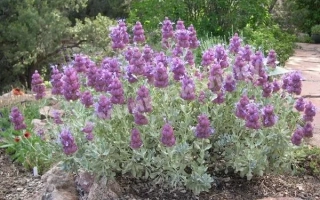
Kubanets is a perennial aromatic plant that simultaneously serves as a decorative element and a valuable medicinal material. The vegetation period is about 87 days, and the plant height is usually in the range from 65 to 75 cm (in some cases it can reach 100 cm). Kubanets leaves are opposite, petiolate, and oblong; upper leaves are sessile and entire, grayish-green from below with pubescence, young leaves – white-felted. Flowers have a pink-purple hue and are gathered in a terminal inflorescence, which appears in June–July for about a month, and flowering occurs already in the second year of growth.
The plant prefers sunny places and open ground. It is light-loving, drought-resistant, and heat-loving, but does not tolerate spring frosts, so it must be covered during the cold period. For growing Kubanets, direct sowing in the ground or seedling method is used – sowing is carried out in winter or early spring, and planting – at the end of May. The feeding area of plants is usually 20×40 cm.
Kubanets is widely used in both the medical, food, cosmetic, and pharmaceutical industries. Leaves and inflorescences have antispasmodic and antiseptic effects; they are used for gargling with angina and other throat diseases. The yield of air-dried leaves reaches 1 kg/m², and seeds – about 0.3 kg/m². Due to aromatic properties, Kubanets leaves are also used in preparing spicy mixtures and for seasoning dishes.
The plant prefers sunny places and open ground. It is light-loving, drought-resistant, and heat-loving, but does not tolerate spring frosts, so it must be covered during the cold period. For growing Kubanets, direct sowing in the ground or seedling method is used – sowing is carried out in winter or early spring, and planting – at the end of May. The feeding area of plants is usually 20×40 cm.
Kubanets is widely used in both the medical, food, cosmetic, and pharmaceutical industries. Leaves and inflorescences have antispasmodic and antiseptic effects; they are used for gargling with angina and other throat diseases. The yield of air-dried leaves reaches 1 kg/m², and seeds – about 0.3 kg/m². Due to aromatic properties, Kubanets leaves are also used in preparing spicy mixtures and for seasoning dishes.
Crop & resistance
Crop
Specifications
| Medicinal Plants | |
|---|---|
| Assignment | |
| Leaf Color | |
| Registration year | 2003 |
| Catalog | Catalog → Sage |
| Manufacturer | ВИЛАР |
| Legal data | |
| Country | Russia |
Not yet комментариев. Be the first!






See also
Often considered together with this variety


Recently viewed
Products you’ve viewed on this site
Reviews · 0