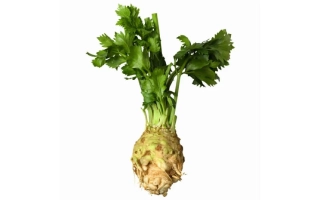
The root celery variety Albin is a mid-early, high-yield variety intended for autumn harvest. The vegetation period lasts about 140-145 days. This variety is characterized by large, round white root crops with a greenish skin tint on the upper part. The root crops reach diameters of 13-15 centimeters and lengths of 12-13 centimeters, with weights varying from 600 to 900 grams. The leaf rosette of Albin is large, slightly spreading, 35-40 centimeters high, with large dark green, deeply cut leaves that well cover the root crop in autumn, providing the variety with frost resistance and cold hardiness. The main feature of the variety is the snow-white pulp of the root crops, which retains its color and structure during canning, freezing, and long-term storage. The root crops are resistant to cavity formation, bolting, and septicoria infection, which increases their marketability to 88-90%. The root system is located in the lower part of the root crop, while the larger part remains above ground. With proper agrotechnics, a yield of up to 6-6.5 kilograms can be obtained from one square meter. Albin celery is well stored in cool and ventilated rooms for up to six months, which makes it convenient for long-term use. For cultivation, sowing for seedlings is recommended in early March, followed by thinning and transplanting into open ground from mid-May according to a 30x20 cm scheme. Root crop harvesting is conducted in September. In addition to culinary use, consuming celery helps remove salts from the body and enhances overall tone.