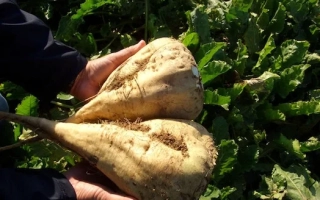
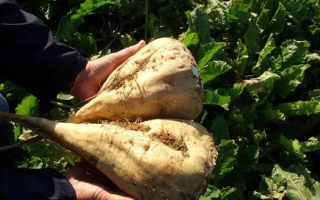
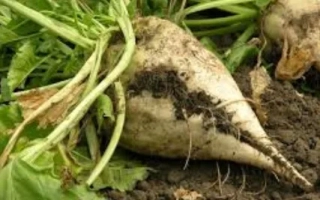
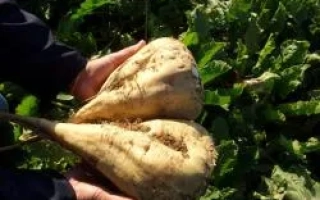
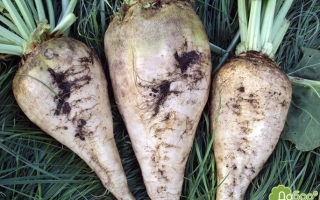
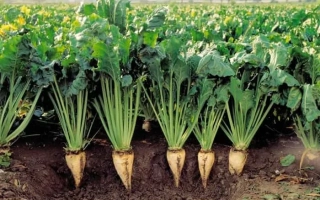
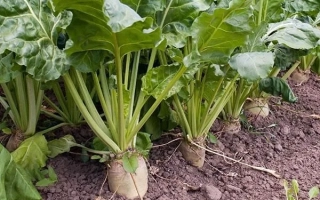
URAZI is a first-generation sugar beet hybrid belonging to single-seeded diploid plants on a sterile N-type basis. It is characterized by a mid-season maturity period and high yield, making it in demand in the Central-Black-Earth, North-Caucasus, and Middle-Volga regions. The root crop has a cylinder-conical shape with a relatively smooth surface, which facilitates harvesting and reduces soil adhesion. The average weight of the root crop is about 555–700 grams, and the vegetative period reaches up to 120 days. The leaf rosette is semi-open, with a moderately corrugated leaf blade, and the root system is taproot, penetrating to a depth of 2–2.5 meters. The hybrid is distinguished by high sugar content – sugar content in root crops reaches 18.1%, which ensures sugar collection at the level of 83 centners per hectare with an average root crop yield of about 464 centners per hectare. URAZI is drought and cold-resistant, which enhances its adaptability in various climatic conditions. However, the plant shows moderate resistance to root-eating insects and susceptibility to powdery mildew and Cercospora, which requires attention during crop protection. The hybrid's application is diverse: it is used in cuisine for preparing traditional dishes such as borscht and kvass, and also serves as a waste-free fodder crop. Moreover, URAZI is in demand in technical processing for the production of sugar and molasses. Thanks to its characteristics and adaptability, this hybrid is a reliable choice for agricultural enterprises focused on efficient sugar beet production.