


SKU #47310
·
48 views
Kyivs'ke 90
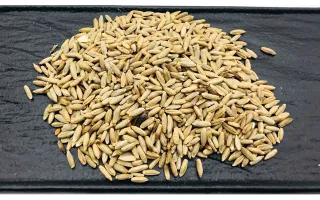
Rye
User rating
0 votes0% positive reviews
No ratings yet — be the first.
Type
Winter barley
Registration year
1995
About product

A reliable winter rye variety from NAAS, offering strong resistance to wireworms and nematodes with proven yield potential.
Type
Winter barley
Registration year
1995
Description
Reliability and Field Performance: "Kyivske 90" Winter Rye
Developed by the National Scientific Center "Institute of Agriculture of NAAS," the "Kyivske 90" variety has established itself as a reliable standard in Ukrainian crop rotation. It represents a long-term selection achievement focused on the climate-specific challenges of the Forest-Steppe and Polissya regions.
Agronomic Profile and Pest Resistance
The primary value of this winter rye variety lies in its balance of yield stability and biological robustness. Farmers choose "Kyivske 90" for its ability to minimize crop losses under challenging soil and climatic conditions.
- Natural Defense: A standout feature of the variety is its high resistance to common soil pests, specifically wireworms and nematodes. This significantly reduces the need for heavy pre-sowing chemical treatments.
- Winter Hardiness: The variety is genetically adapted to the sharp temperature fluctuations typical of Central and Northern Ukraine, ensuring strong stand density after winter.
The practical application of "Kyivske 90" is supported by its consistent grain quality, meeting the standards for both food production and processing industries. Thanks to a vigorous root system and rapid spring development, the crop aggressively outcompetes weeds, reducing the demand for intensive herbicide applications.
For the modern agricultural enterprise, selecting "Kyivske 90" is a pragmatic decision for predictable production. The variety remains in demand due to the purity of its seed material and the consistent traits maintained by the originator. This allows farmers to plan their production cycles several seasons in advance with high confidence in the output.
Crop & resistance
Crop
Pest resistance
Specifications hover over for a hint about the specification
|
Type
Type
Galia (Galia) type — relatively new, of Israeli origin, although there are indications that this variety may originate from Spain. The fruits of this type are round or oval, weighing about 1 kg. The surface is smooth, covered with a delicate, connected netting, turning yellow whe... |
|
|---|---|
| Registration year | 1995 |
| Catalog | Catalog → Rye |
| Legal data |
Show · 1
|
| Country | Ukraine |
Store offers
Prices are updated on loadLoading offers…
Aggregator catalog: prices are collected automatically from store websites, normalized by AI and converted at the current exchange rate. Before ordering, confirm the price and availability on the store's website. This block is not indexed by search engines — the data is loaded after the page opens.
Not yet комментариев. Be the first!


See also
Often considered together with this variety



Recently viewed
Products you’ve viewed on this site
Reviews · 0