


SKU #47284
·
55 views
Rye Borotba
Rye
User rating
0 votes0% positive reviews
No ratings yet — be the first.
Type
Winter barley
Registration year
1993
About product

A reliable, high-yield winter rye variety with strong natural resistance to common pathogens.
Type
Winter barley
Registration year
1993
Description
Operational review of 'Borotba' winter rye
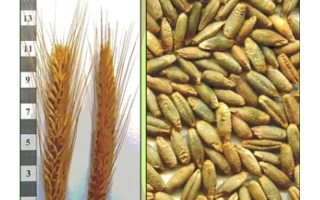
For a farm manager, selecting the 'Borotba' variety, developed by the Chernihiv Institute of Agricultural Production, is a pragmatic decision focused on reliability. This winter rye variety is engineered to thrive under Ukrainian climatic conditions, providing a robust, low-maintenance crop that simplifies farm management.
Agronomic resilience and plant health
The primary advantage of this variety is its inherent resistance to common threats that typically drive up production costs. In field conditions, 'Borotba' handles stressors efficiently:
- Natural immunity against brown wheat rust and powdery mildew significantly reduces the reliance on intensive fungicide schedules.
- Resistance to snow mold ensures high survival rates even after harsh, unpredictable winters.
- Tolerance to nematodes minimizes the need for complex, costly soil treatments.
Management and harvestability
From an operator's perspective, 'Borotba' is an undemanding crop. It demonstrates excellent winter hardiness, ensuring uniform stand density in the spring. During harvest, the crop's structural uniformity allows for precise combine calibration, which effectively minimizes yield losses and ensures a clean run. By choosing this variety, producers can optimize their inputs while maintaining a consistent and reliable output, making it an economically sound choice for sustainable cereal production.
Crop & resistance
Crop
Disease resistance
Pest resistance
Specifications hover over for a hint about the specification
|
Type
Type
Galia (Galia) type — relatively new, of Israeli origin, although there are indications that this variety may originate from Spain. The fruits of this type are round or oval, weighing about 1 kg. The surface is smooth, covered with a delicate, connected netting, turning yellow whe... |
|
|---|---|
| Registration year | 1993 |
| Catalog | Catalog → Rye |
| Legal data |
Show · 1
|
| Country | Ukraine |
Store offers
Prices are updated on loadLoading offers…
Aggregator catalog: prices are collected automatically from store websites, normalized by AI and converted at the current exchange rate. Before ordering, confirm the price and availability on the store's website. This block is not indexed by search engines — the data is loaded after the page opens.
Not yet комментариев. Be the first!




See also
Often considered together with this variety



Recently viewed
Products you’ve viewed on this site
Reviews · 0