
SKU #73199
·
47 views
POVOLZHSKAYA 94
Grass Pea
User rating
0 votes0% positive reviews
No ratings yet — be the first.
Growing Season
100-130
Flower Color
Violet
Registration year
1996
About product
POVOLZHSKAYA 94 is a variety of a perennial herbaceous plant from the legume family, obtained by mass selection from a local perennial wild specimen. The plant is characterized by a well-developed root system with creeping rhizomes and a stem up to 2.6 m high, ribbon-shaped, bordered on both sides with a wide green edge, hairless and branched. Leaves are 10–15 cm long, even-pinnate, narrow-lanceol…
Growing Season
100-130
Flower Color
Violet
Registration year
1996
Description
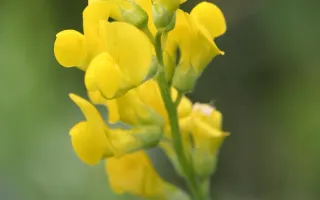
POVOLZHSKAYA 94 is a variety of a perennial herbaceous plant from the legume family, obtained by mass selection from a local perennial wild specimen. The plant is characterized by a well-developed root system with creeping rhizomes and a stem up to 2.6 m high, ribbon-shaped, bordered on both sides with a wide green edge, hairless and branched. Leaves are 10–15 cm long, even-pinnate, narrow-lanceolate-linear, hairless, with a weak waxy coating; leaflet petioles are almost sessile with narrow wings, the axis ending in tendrils. Inflorescences are racemes with 1–2 flowers on long pedicels, the corolla pink, 15–17 mm long, with a greenish outer side of the sails.
The variety is distinguished by high yield: green mass over 70 t/ha, seeds – from 0.6 to 0.9 t/ha. Seeds are round, flat, 5–6 mm in size, with coloring in the gray-red-brown range. Seed hardness is 40–80%. The vegetative period from the start of spring vegetation to the first cut lasts 29–32 days, total vegetative period length – 115–125 days. Green mass contains 26.6% protein and 198.8 mg/kg carotene.
POVOLZHSKAYA 94 shows drought resistance, winter hardiness, salt tolerance, and resistance to fungal diseases. Plants can grow in one place for up to 20 years, making them attractive for long-term agricultural use. The variety is included in the State Register of Breeding Achievements, confirming its recognition as a highly effective and reliable product.
The variety is distinguished by high yield: green mass over 70 t/ha, seeds – from 0.6 to 0.9 t/ha. Seeds are round, flat, 5–6 mm in size, with coloring in the gray-red-brown range. Seed hardness is 40–80%. The vegetative period from the start of spring vegetation to the first cut lasts 29–32 days, total vegetative period length – 115–125 days. Green mass contains 26.6% protein and 198.8 mg/kg carotene.
POVOLZHSKAYA 94 shows drought resistance, winter hardiness, salt tolerance, and resistance to fungal diseases. Plants can grow in one place for up to 20 years, making them attractive for long-term agricultural use. The variety is included in the State Register of Breeding Achievements, confirming its recognition as a highly effective and reliable product.
Crop & resistance
Crop
Specifications
| Growing Season | 100-130 |
|---|---|
| Flower Color | |
| Registration year | 1996 |
| Catalog | Catalog → Grass Pea |
| Legal data |
Show · 3
|
| Country | Russia |
Store offers
Prices are updated on loadLoading offers…
Aggregator catalog: prices are collected automatically from store websites, normalized by AI and converted at the current exchange rate. Before ordering, confirm the price and availability on the store's website. This block is not indexed by search engines — the data is loaded after the page opens.
Not yet комментариев. Be the first!
See also
Often considered together with this variety




Recently viewed
Products you’ve viewed on this site
Reviews · 0