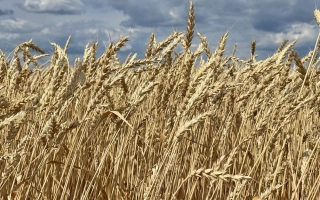
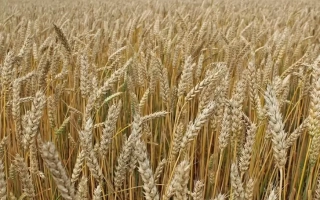
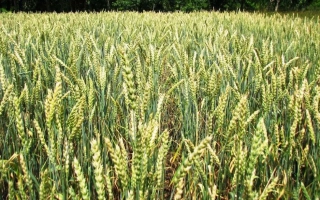
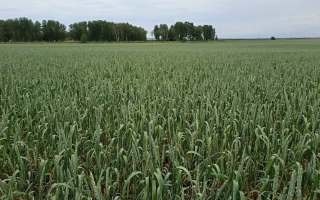
The wheat variety 'Blaze' is a short-stemmed winter wheat with awns, standing 95 to 105 cm tall. It belongs to medium-early varieties with a vegetation period ranging from 266 to 275 days and an average stage of vernalization of 27-29 days. The plant exhibits photoperiodic sensitivity of about 67 days, allowing for successful cultivation in steppe and forest-steppe zones. Frost and winter hardiness are rated at 7-8 points, as is drought tolerance, making it resistant to adverse climatic conditions.
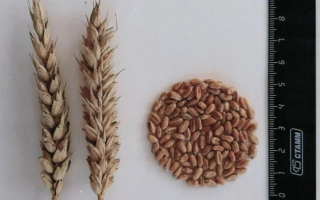
'Blaze' is distinguished by high resistance to common diseases, including septoria and various types of loose smut (8-9 points), as well as moderate resistance to powdery mildew, brown rust, and stem rust (5-7 points). Additionally, the variety is characterized by high resistance to grain shedding on the root. The wheat head is awn-bearing, white, cylindrical, and of medium length (6.5-7.0 cm), with long, stiff, and barbed awns. The lemma tooth is medium-sized and moderately curved, with an upturned and narrow shoulder.
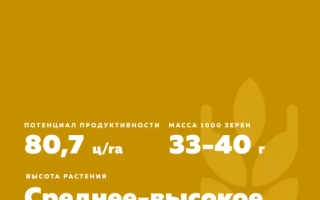
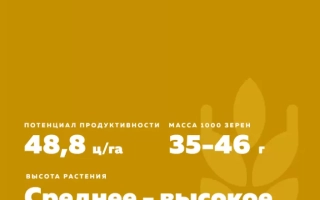
Grain quality meets the requirements for top-grade hard wheat. Grain specific weight is 798-800 g/L, and the mass of 1000 grains varies from 43.6 to 52.7 g. Gluten content ranges from 27.4% to 31.3%, while protein content is between 13.1% and 14.7%. These indicators ensure a high rating for pasta products, reaching 4.5-5.0 points. Yield can fluctuate from 22.2 to 95.1 c/ha, indicating high productivity. The variety is recommended for cultivation in various regions of Russia, including Tver, Yaroslavl, Vladimir, Ivanovo, Ryazan, and Tula regions, due to its high drought tolerance and good resistance to lodging.