


SKU #52840
·
49 views
Potato Olymp
Potato
Prices in stores
No offers yet — stores have not added prices for this product yet.
Similar varieties with prices
-
Fotinia
from 0.99 €per 1 kg
-
 Red ScarlettHZPC
from 0 €per 1 kg
Red ScarlettHZPC
from 0 €per 1 kg
-
 RED ROSE
from 5.54 €per 1 kg
RED ROSE
from 5.54 €per 1 kg
-
 GalaNORIKA
from 0 €per 1 kg
GalaNORIKA
from 0 €per 1 kg
Direction
Table Potato, French Fries
Time to first harvest
85-95 days
Tuber: skin color
Red
Tuber: flesh color
White
Your mark
0 votes
0% positive ratings
Description
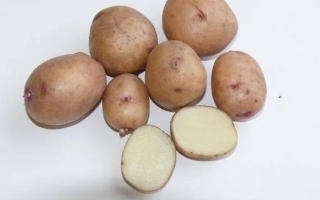
The potato variety 'Olymp' is a medium-maturing table-type variety of Russian selection with a maturation period of 80-95 days. Plants are tall, stem-type, with upright stems and medium-sized green leaves. Tubers are oval-round in shape with small eyes, covered with smooth red skin, and the flesh is white. The mass of marketable tubers varies from 78 to 131 grams, with 9-12 tubers per plant. The starch content in tubers ranges from 16.1-17.2%, slightly higher than standard levels of other varieties. The taste qualities are good, and the culinary type CD makes this variety universal for baking, boiling, making mashed potatoes, and processing into crispy potatoes. The 'Olymp' variety is characterized by stable and high yields, ranging from 214 to 297 centners per hectare, with a maximum yield of up to 314 centners, significantly exceeding the standards of some other varieties. The tuber marketability is high — from 87 to 98%, and storability reaches 89-95%, ensuring long-term storage without quality loss. Potatoes are well-suited for cultivation in the Volgo-Vyat and Central Chernozem regions, demonstrating resistance to adverse conditions and diseases. Special attention is given to the variety's disease resistance: 'Olymp' is resistant to potato cyst nematode, increasing its reliability in production. However, the variety is moderately resistant to late blight, showing moderate susceptibility in foliage and moderate resistance in tubers to various isolates of the pathogen detected in different regions. Nevertheless, the variety is susceptible to the golden potato cyst nematode. Due to its combination of late blight resistance, stable yield, high marketable tuber output, and good storability, the 'Olymp' variety is a valuable choice for processing and consumption.
Crop & resistance
Crop
Disease resistance
Specifications
| Direction | |
|---|---|
| Time to first harvest | 85-95 days |
| Tuber | |
| Skin color | |
| Flesh color | |
| Skin structure | |
| Eye depth | |
| Mass | 50-130 grams |
| Starch Content | 16-17% |
| Flavor Characteristics | |
| Registration year | 2003 |
| Catalog | Catalog → Potato |
| Legal data |
Show · 2 |
| Country | Russia |
No reviews yet. Be the first to share your experience.
Alternatives
Seed potatoes · similar varieties




See also
Often considered together with this variety


Recently viewed
Products you’ve viewed on this site
Reviews