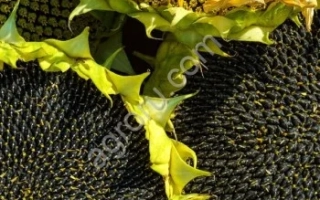
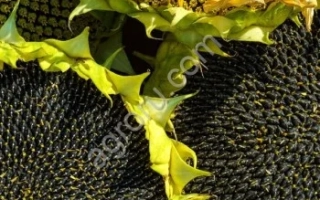
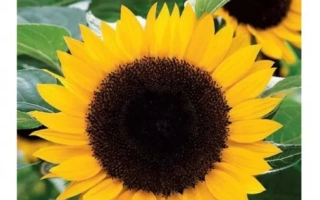
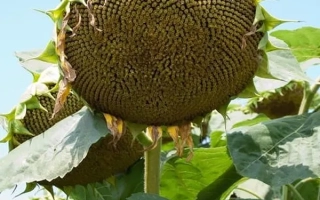
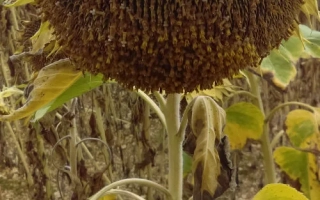
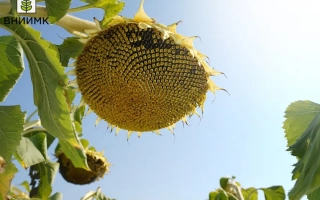
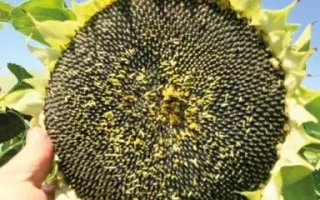
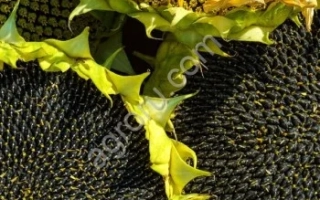
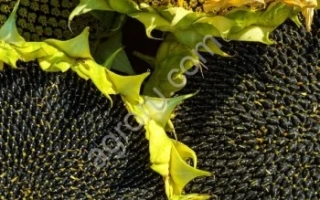
Sunflower variety ZORO is a simple hybrid included in the State Register for the Central Black Earth region. The plant is of medium height, non-branching, with large leaves of dark green color, exhibiting weak blistering and large serration. Ray florets are elongated and yellow, tubular florets are also yellow, with weakly expressed anthocyanin coloring. The head is of medium size, turned downwards, the shape of the seed surface varies from slightly convex to convex. Seeds are of medium or large size, broadly oval or broadly egg-shaped, with a main black coloring and weakly expressed gray stripes.
Variety ZORO is distinguished by early maturity and high yield. Average seed yield in various regions ranges from 20.3 to 24.6 c/ha, while in individual farms, maximum yield reached up to 47.5 c/ha. Oil content is at or slightly above the standard, fat content in seeds varies from 48.6% to 55.1%, ensuring high oil collection — up to 10.9 c/ha. This makes the variety attractive for sunflower oil production, which is in demand in the food and paint industries.
Sunflower ZORO is resistant to phomopsis and dodder, however, it is susceptible to false downy mildew and rots, although rot damage during testing was insignificant. Thanks to a powerful root system and adaptive characteristics, the crop is well-suited for cultivation in the Central Black Earth and North Caucasus regions. In addition, sunflower is widely used not only for oil production but also as a feed crop for animals, increasing its economic value.