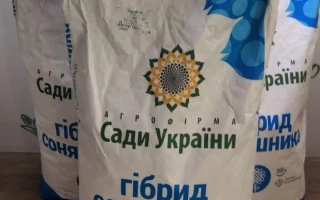
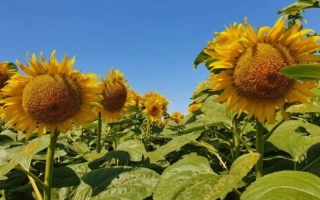
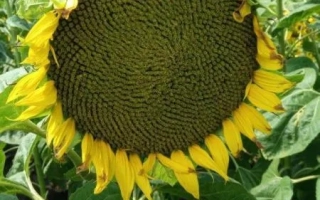
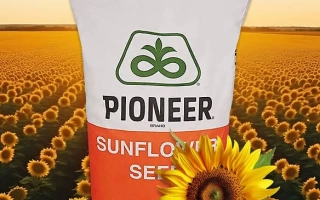
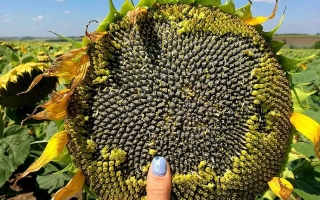
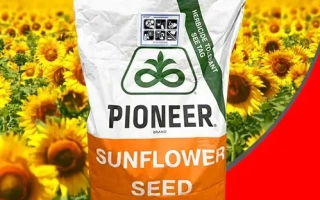
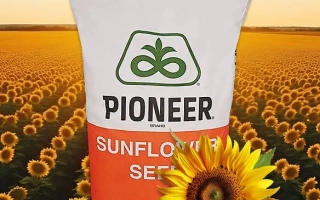
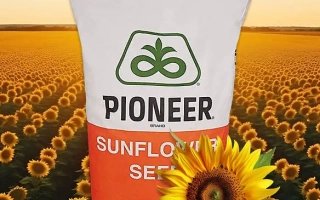
Sunflower variety Oreol is a simple interline hybrid with a vegetation period of 102-105 days. The plant reaches a height of up to 170 cm, and the diameter of the convex head can reach up to 20 cm. The seeds of this sunflower are characterized by high oil content — up to 50.9%, making it attractive for oil production. Yield under optimal growing conditions reaches 42 centners per hectare. The variety is distinguished by high resistance to various stress factors and diseases: it tolerates drought well, has good resistance to lodging, is tolerant to races of downy mildew A-E, and is resistant to head and root rot, fusarium, fomosis, and false powdery mildew. The recommended plant density before harvest is 60-65 thousand per hectare in humid areas and 50-55 thousand per hectare under conditions of insufficient moisture. Main cultivation regions — Steppe and Forest-Steppe of Ukraine.
To protect sunflower variety Oreol from grassy weeds, it is recommended to use the systemic herbicide Oreol Maxi, whose active ingredient is cyclohexanedione. This product effectively combats weeds such as crabgrass and quackgrass, destroying both above-ground parts and roots of plants. The herbicide quickly penetrates into weeds, blocking fatty acid synthesis, which leads to their death. It is recommended to apply the product during the active growth phase of weeds at air temperatures from +15 to +25 ºC and relative humidity of no less than 65%. To achieve maximum effectiveness of treatment, it is desirable to conduct inter-row soil cultivation within 7 days before or after herbicide application.
Herbicide Oreol Maxi is produced in the form of an emulsifiable concentrate with an active ingredient concentration of 125 g/l and is packaged in 10-liter cans. It is distinguished by its ability to destroy underground parts of weeds, preventing their regrowth, and effectively combats cereal grain pests at minimal doses. The product does not exhibit phytotoxicity to crops, can be applied at any stage of vegetation, and rapidly decomposes in soil without negatively affecting subsequent crops.