


SKU #4165
·
327 views
Early Subhi
Cherry Plum
User rating
0 votes0% positive reviews
No ratings yet — be the first.
Assignment
For Fresh Consumption
Ripening Period
Early
Flavor
Sour-sweet (sugar 8–11%)
Flesh Density
Soft
Store offers · 3 from 1 stores
Prices are updated on loadLoading offers…
Available at: Сады Семирамиды
Aggregator catalog: prices are collected automatically from store websites, normalized by AI and converted at the current exchange rate. Before ordering, confirm the price and availability on the store's website. This block is not indexed by search engines — the data is loaded after the page opens.
About product

This variety was obtained at the Nikitsky Botanical Garden by E.P. Shofaristov, A.M. Sholokhov, G.A. Gorshkov, and N.G. Ageeva through selection from local apricot samples. It was included in the State Register for the North Caucasus region in 2002. The tree is vigorous, forming a round, spreading, dense crown. Fruits are large (25-45 g), round or broadly oval. The skin is of medium density and t…
Assignment
For Fresh Consumption
Ripening Period
Early
Flavor
Sour-sweet (sugar 8–11%)
Flesh Density
Soft
Description
This variety was obtained at the Nikitsky Botanical Garden by E.P. Shofaristov, A.M. Sholokhov, G.A. Gorshkov, and N.G. Ageeva through selection from local apricot samples. It was included in the State Register for the North Caucasus region in 2002.
The tree is vigorous, forming a round, spreading, dense crown.
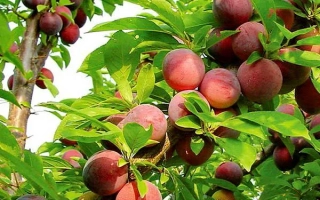
Fruits are large (25-45 g), round or broadly oval. The skin is of medium density and thickness, yellowish-red with a burgundy blush and small light spots, covered with a slight waxy coating. The flesh is yellowish-cream, tender, juicy, melting, finely fibrous, dense, with a raspberry-red hue beneath the skin, with a mild aroma, slightly sweet-tart (4.0 points). The fruit contains: dry matter 11.3-11.9%, sugars 5.6-10.7%, organic acids 1.32-1.6%, vitamin C 8.3-9.2 mg/100g, leucoanthocyanins 198-262 mg/100g, anthocyanins 66-164 mg/100g of raw material. The stone is small, oval, with a blunted apex, easily separates from the flesh.
High yield. Moderate winter hardiness, resistant to Clasterosporium and fruit rot.
Advantages of the variety: early ripening, resistant to fungal diseases.
Disadvantages: moderate winter hardiness.
Crop & resistance
Crop
Disease resistance
Specifications hover over for a hint about the specification
| Assignment | |
|---|---|
| Ripening Period | |
| Flavor | |
| Flesh Density | |
|
Fruit Color
Fruit Color
The fruit color of tomato varieties is influenced by the combination of skin and flesh color. Some varieties have transparent skin, others — yellow. When combined differently, the fruits can acquire quite diverse colors. The fruit color is affected by pigments (lycopene) and thei... |
|
|
Fruit Weight
Fruit Weight
Tomato fruits are classified by weight as: very small — less than 20 grams; small — 20 — 50 grams; medium — 50 — 100 grams; large — 100 — 200 grams; very large — more than 200 grams. |
25-45 |
| Pit Size | |
| Catalog | Catalog → Cherry Plum |
Not yet комментариев. Be the first!
Alternatives
Cherry Plum · similar varieties


See also
Often considered together with this variety





Recently viewed
Products you’ve viewed on this site
Reviews · 0