


SKU #42251
·
59 views
Oksamit
Onion
User rating
0 votes0% positive reviews
No ratings yet — be the first.
Type
Onion
Registration year
2010
About product

Mid-late variety with high bulb density and excellent potential for long-term winter storage.
Type
Onion
Registration year
2010
Description
Technical Profile of the 'Oksamyt' Onion
The 'Oksamyt' variety, developed by the Transcarpathian Institute of Agro-Industrial Production of the NAAS, is a selection solution designed for mid-late season production with high storage potential. The primary value of this hybrid lies in its physiological resilience to stress factors inherent in Ukrainian climatic zones.
Morphological Features and Bulb Structure
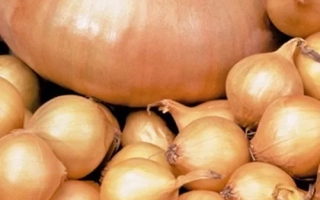
- Shape and Density: The bulbs feature a rounded configuration with a high density of outer scales. This density allows for mechanized harvesting with minimal damage to the commercial part of the crop.
- Outer Scales: The bronze-yellow color of the scales is an indicator of high dry matter content, which directly correlates with the ability to withstand long-term warehouse storage.
- Internal Architecture: Moderate multi-bud structure ensures a stable size of the marketable head and high uniformity, provided planting density is managed correctly.
Agronomic Advantages
During performance trials, the variety demonstrated responsiveness to intensive feeding and irrigation technologies. The stability of maturation during the physiological maturity phase minimizes the risks of losses from downy mildew, to which the variety exhibits moderate resistance. The root system is sufficiently developed to effectively extract moisture from deep soil layers during the bulb formation stage.
The variety is highly recommended for commercial farms targeting the long-term storage market. Due to its genetically inherent prolonged dormancy period, the product maintains its marketability until the end of the winter period, provided that appropriate storage temperature conditions (0 to +2°C) are strictly maintained.
Video · 1 video
Suggest a video →Specifications hover over for a hint about the specification
|
Type
Type
Galia (Galia) type — relatively new, of Israeli origin, although there are indications that this variety may originate from Spain. The fruits of this type are round or oval, weighing about 1 kg. The surface is smooth, covered with a delicate, connected netting, turning yellow whe... |
|
|---|---|
| Registration year | 2010 |
| Catalog | Catalog → Onion |
| Legal data |
Show · 1
|
| Country | Ukraine |
Store offers
Prices are updated on loadLoading offers…
Aggregator catalog: prices are collected automatically from store websites, normalized by AI and converted at the current exchange rate. Before ordering, confirm the price and availability on the store's website. This block is not indexed by search engines — the data is loaded after the page opens.
Not yet комментариев. Be the first!
Alternatives
Onion seeds · similar varieties


See also
Often considered together with this variety




Recently viewed
Products you’ve viewed on this site
Reviews · 0