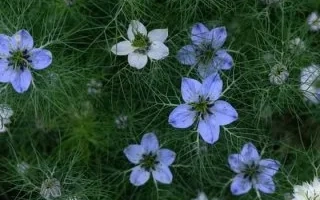
Borage (Borago officinalis), also known as starflower, is an annual herb growing 30–80 cm tall, rapidly growing and highly cold-hardy. The leaves are oval, large, slightly wavy-edged, with a characteristic fresh cucumber aroma; they are rich in vitamin C, carotene, mineral salts, and resinous acids. The flowers are delicate blue or white, five-petaled, with a faint aroma, used to decorate desserts, crystallize, or freeze.
The benefits of borage in food and medicine are multifaceted. Young greens are used in salads, soups, and meat dishes; its leaves calm the nervous system, regulate heart function, improve metabolism, and aid in removing excess fluid. In therapeutic practice, the plant is used for heart weakness, neurosis, rheumatism, skin diseases, and as an expectorant due to the presence of saponins, tannins, flavonoids, and alkaloids.
Borage prefers light fertile soils with moderate moisture; the plant tolerates sun and partial shade well. Seeds are sown early spring or in autumn at a depth of 1–2 cm, row spacing 40–45 cm, and sowing rate 2–4 g/m². After germination, plants are thinned to 15–20 cm between bushes. Borage quickly reaches green harvest stage in a month and seed stage in 50–70 days. Due to high yield, it is also valued as a honey plant, providing bees up to 200 kg of honey per hectare.