


SKU #47023
·
70 views
Dietary
Oats
VNISUser rating
0 votes0% positive reviews
No ratings yet — be the first.
Ripeness Group (days)
Early maturing (80-95)
Yield
60+
Disease Resistance
Powdery mildew, Rust, Mottling, Mixed
Mass of 1000 seeds (g)
28-32
Prices in stores
from0.48 €per 1 kg
pack from 484.13 € per 1 t
1 offer from 1 store
Store offers · 1 from 1 stores
Prices are updated on loadLoading offers…
Available at: Khaskom
Aggregator catalog: prices are collected automatically from store websites, normalized by AI and converted at the current exchange rate. Before ordering, confirm the price and availability on the store's website. This block is not indexed by search engines — the data is loaded after the page opens.
About product

Dietary oats is a naked-seed variety distinguished by the absence of seed coats, ensuring high quality and increased content of protein and fatty acids. This variety is characterized by high adaptability and resistance to adverse environmental stress factors. It belongs to early-maturing varieties and exhibits high resistance to diseases such as powdery mildew, helminthosporiosis, tough rust, rust…
Ripeness Group (days)
Early maturing (80-95)
Yield
60+
Disease Resistance
Powdery mildew, Rust, Mottling, Mixed
Mass of 1000 seeds (g)
28-32
Description
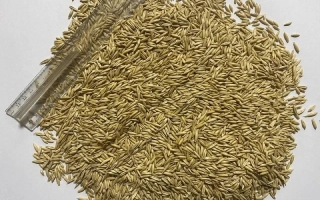
Dietary oats is a naked-seed variety distinguished by the absence of seed coats, ensuring high quality and increased content of protein and fatty acids. This variety is characterized by high adaptability and resistance to adverse environmental stress factors. It belongs to early-maturing varieties and exhibits high resistance to diseases such as powdery mildew, helminthosporiosis, tough rust, rust, ascochytosis, and bacterial spots. Additionally, it is resistant to lodging and stem breakage, facilitating cultivation and harvest.
The variety Dietary was included in the Register of Plant Varieties of Ukraine since 2015 and was developed by scientists at the Verkhniazhskaya Experimental Selection Station in collaboration with the All-Ukrainian Scientific Institute of Selection. The breeding method included interspecific hybridization and multiple individual-family selections based on quantitative and qualitative traits. The plant has an intermediate habit, with the absence or weak pubescence of lower leaves and no pubescence at the upper stem node. Hairs are long, with semi-erect branches and drooping secondary spikes. The grain is white with a cream tint, well-filled, with a 1000-grain mass of 26.4 g. The vegetation period ranges from 70-90 days. The variety exhibits high resistance to shattering, lodging, crown rust, airborne soot, and drought. Yield in the Polissia and Steppe zones reaches 4.9-5.7 t/ha, with protein content in grain at 19.4% and fat at 3.33%.
Naked-seed Dietary oats possesses a unique combination of vitamins, minerals, and amino acids, making it beneficial for health. Germinated grain of this variety has even more pronounced beneficial properties: supports heart health, normalizes blood sugar levels, improves digestion, and has anti-inflammatory effects. Due to its high fiber content and low glycemic index, oats promote prolonged satiety, reduce appetite, help control calorie intake, and maintain stable energy levels throughout the day.
The variety Dietary was included in the Register of Plant Varieties of Ukraine since 2015 and was developed by scientists at the Verkhniazhskaya Experimental Selection Station in collaboration with the All-Ukrainian Scientific Institute of Selection. The breeding method included interspecific hybridization and multiple individual-family selections based on quantitative and qualitative traits. The plant has an intermediate habit, with the absence or weak pubescence of lower leaves and no pubescence at the upper stem node. Hairs are long, with semi-erect branches and drooping secondary spikes. The grain is white with a cream tint, well-filled, with a 1000-grain mass of 26.4 g. The vegetation period ranges from 70-90 days. The variety exhibits high resistance to shattering, lodging, crown rust, airborne soot, and drought. Yield in the Polissia and Steppe zones reaches 4.9-5.7 t/ha, with protein content in grain at 19.4% and fat at 3.33%.
Naked-seed Dietary oats possesses a unique combination of vitamins, minerals, and amino acids, making it beneficial for health. Germinated grain of this variety has even more pronounced beneficial properties: supports heart health, normalizes blood sugar levels, improves digestion, and has anti-inflammatory effects. Due to its high fiber content and low glycemic index, oats promote prolonged satiety, reduce appetite, help control calorie intake, and maintain stable energy levels throughout the day.
Crop & resistance
Crop
Specifications hover over for a hint about the specification
| Ripeness Group (days) | Early maturing (80-95) |
|---|---|
|
Yield
Yield
Overall bulb harvest per unit area. Depends on both onion variety characteristics and agronomic practices, fertilizers, and irrigation. Under optimal growing conditions, an onion yield of 100 tons per hectare and above is not considered record-breaking. |
60+ |
| Disease Resistance | |
| Mass of 1000 seeds (g) | 28-32 |
| Protein (%) | 13+ |
| Corn Color | |
| Usage Type | |
| Resistance to Sliding | |
| Registration year | 2015 |
| Catalog | Catalog → Oats |
| Manufacturer | VNIS |
| Legal data | |
| Country | Ukraine |
Not yet комментариев. Be the first!



See also
Often considered together with this variety






Recently viewed
Products you’ve viewed on this site
Reviews · 0