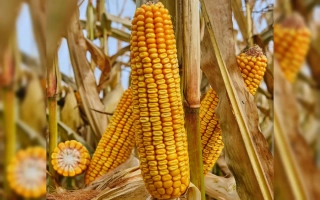
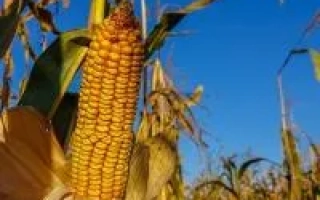
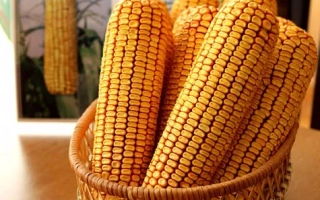
ES Saphari — a mid-early maize hybrid with FAO 260, intended for grain production in the Central Chernozem, North Caucasus, and Lower Volga regions. The plant is tall, reaching approximately 285 cm, with broad, straight leaves and medium anthocyanin coloration of the silk and stalk. The ear has medium cob density and medium main axis length, promoting high yields. The grain type is intermediate with red-orange coloring on the upper part, giving the grain an attractive appearance and good technological properties.
The hybrid demonstrates high yield: in the Central Chernozem region, average yield is 84.9 c/ha, 14.3% above standard; in the North Caucasus — 57.9 c/ha (+11.1%); in the Lower Volga — 55.5 c/ha (+18.2%). Maximum yields reached 148.9 c/ha in Lipetsk Oblast and 133.7 c/ha in Saratov Oblast. Grain moisture at harvest varies from 20 to 28.7%, facilitating subsequent processing and storage. ES Saphari has moderate resistance to gray leaf spot and stalk rot, as well as medium susceptibility to corn borer.
The hybrid exhibits rapid early growth and high tolerance to sulfonylurea herbicides, simplifying crop care and protection. Due to its slender stalk, it ensures high grain extraction from the ear — up to 70%. ES Saphari is adapted to various soil-climatic conditions and maintains stable yield potential even under adverse weather conditions. These characteristics make it an attractive choice for farmers aiming to achieve high-quality maize yields.