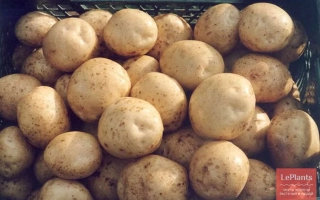
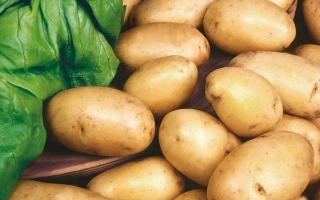
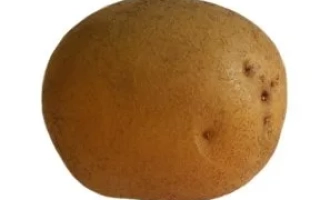
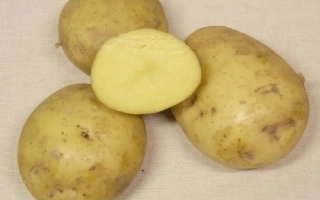
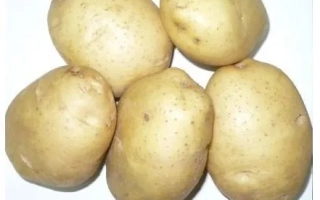
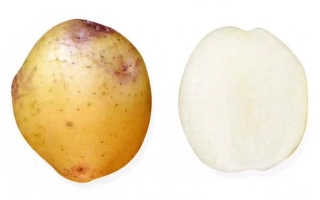
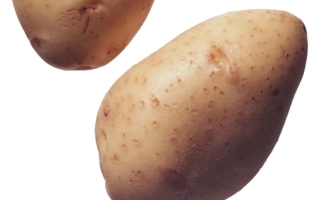
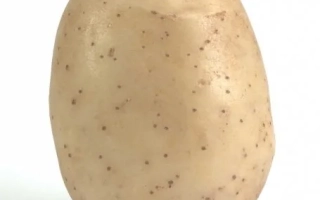
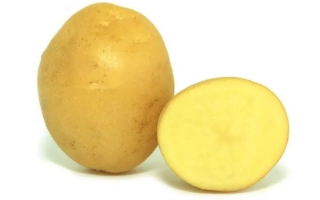
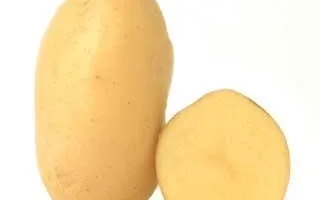
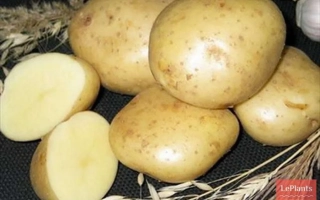
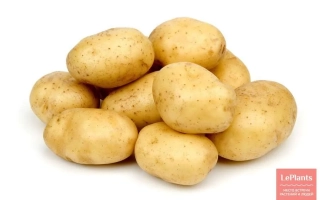
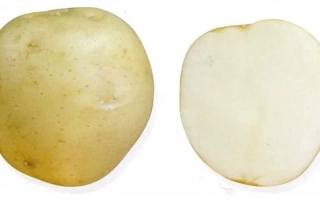
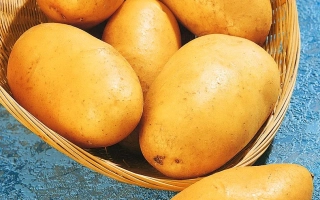
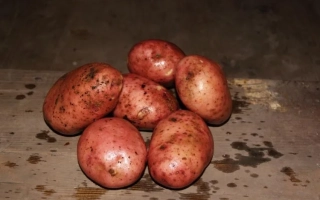
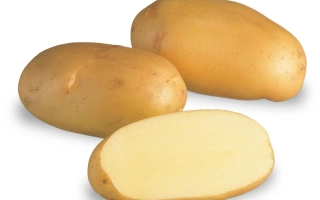
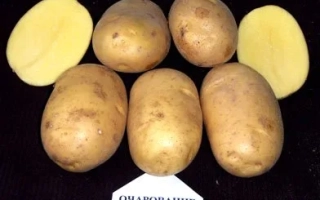
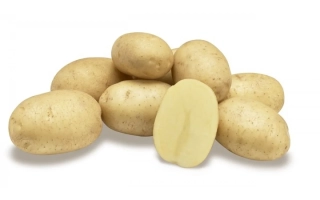
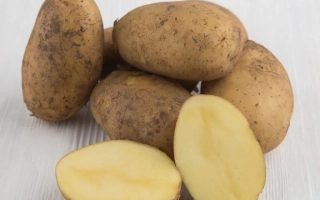
DUBRAVA potato is a medium-maturing table variety with a vegetation period of 80 to 95 days. The plant is of medium height, semi-upright, with a medium green leaf type and slightly wavy leaf margins. Flowers are pale red-purple. Tubers are round, large, with small eyes, yellow skin, medium smoothness or slightly netted, cream-colored flesh. Marketable tuber mass varies from 91 to 196 grams, with 6 to 12 tubers per plant. Starch content ranges from 10.9-17.2%, making the variety suitable for various culinary purposes, including boiling, frying, baking, as well as for frozen vegetable mixes and potato pancakes.
DUBRAVA variety is characterized by high yield, reaching 172-327 centners per hectare, with tuber marketability from 82 to 98%. It is an intensive type, effectively utilizing natural soil fertility and positively responds to application of increased doses of mineral fertilizers. It is preferably grown on light and medium soils, but is not resistant to excessive moisture during bud formation and flowering. At the same time, the variety is resistant to drought in the latter half of the vegetation period and at the stage of plant senescence. Recommended planting density is 50-52 thousand tubers per hectare for commercial production and 60-62 thousand for seed production.
DUBRAVA potato exhibits high resistance to several diseases, including potato cancer, golden potato cyst nematode, as well as viruses causing crinkly, mosaic, and leaf curling. Moderate resistance is observed to late blight of leaves and tubers, scab, and rhizoctonia. Storage durability is high, reaching 97%, ensuring good storage of the harvest. Due to its taste qualities and disease resistance, DUBRAVA variety is a reliable choice for cultivation in the Northwestern region and other suitable climatic conditions.