


SKU #52741
·
53 views
KAMCHATKA
Potato
User rating
0 votes0% positive reviews
No ratings yet — be the first.
Direction
Table Potato
Corm; shape
Oval elongated
Corm; skin color
Yellow
Corm; skin structure
Smooth
About product

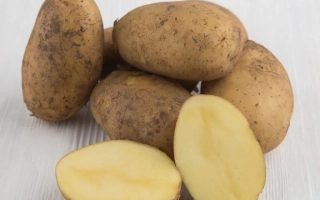
Potato variety Kamchatka is a medium-early table-type variety developed in Russian breeding, primarily intended for cultivation in the Far East region. The plant is tall with semi-upright light-green leaves having slight wavy edges. Tubers are elongated-oval with small eyes, smooth yellow skin, and dark-yellow flesh. The weight of one marketable tuber ranges from 93 to 134 grams, with 8-12 tubers…
Direction
Table Potato
Corm; shape
Oval elongated
Corm; skin color
Yellow
Corm; skin structure
Smooth
Description
Potato variety Kamchatka is a medium-early table-type variety developed in Russian breeding, primarily intended for cultivation in the Far East region. The plant is tall with semi-upright light-green leaves having slight wavy edges. Tubers are elongated-oval with small eyes, smooth yellow skin, and dark-yellow flesh. The weight of one marketable tuber ranges from 93 to 134 grams, with 8-12 tubers per plant. Starch content in tubers is 11.4–14.4%, making this variety versatile for various culinary purposes.
The yield of Kamchatka variety ranges from 256–290 centners per hectare, with maximum yields reaching 321 centners, comparable to standards such as Fresco and Romano. Marketability of tubers is high — 84–97%, and storability reaches 95%, ensuring good product preservation during storage. Flavor qualities are rated as good to excellent, and its culinary type AB makes it suitable for making soups, salads, and frying.
The variety shows resistance to potato late blight (pathotype I), enhancing its reliability during cultivation. However, it is susceptible to golden potato cyst nematode, requiring attention to agronomic practices. Overall, Kamchatka is a reliable and productive potato variety with good consumer qualities, suitable for cultivation in Far Eastern conditions.
The yield of Kamchatka variety ranges from 256–290 centners per hectare, with maximum yields reaching 321 centners, comparable to standards such as Fresco and Romano. Marketability of tubers is high — 84–97%, and storability reaches 95%, ensuring good product preservation during storage. Flavor qualities are rated as good to excellent, and its culinary type AB makes it suitable for making soups, salads, and frying.
The variety shows resistance to potato late blight (pathotype I), enhancing its reliability during cultivation. However, it is susceptible to golden potato cyst nematode, requiring attention to agronomic practices. Overall, Kamchatka is a reliable and productive potato variety with good consumer qualities, suitable for cultivation in Far Eastern conditions.
Video · 1 video
Suggest a video →Crop & resistance
Crop
Disease resistance
Specifications hover over for a hint about the specification
|
Direction
Direction
Existing varieties and types of cabbage are grown for fresh consumption, long-term storage, and technical processing. |
|
|---|---|
| Corm; shape | |
| Corm; skin color | |
| Corm; skin structure | |
| Cormorant; eye depth | |
| Corm; mass | 50-130 grams |
| Starch Content | 11-12%, 12-13%, 13-14% |
| Registration year | 2009 |
| Catalog | Catalog → Potato |
| Legal data | |
| Country | Russia |
Store offers
Prices are updated on loadLoading offers…
Aggregator catalog: prices are collected automatically from store websites, normalized by AI and converted at the current exchange rate. Before ordering, confirm the price and availability on the store's website. This block is not indexed by search engines — the data is loaded after the page opens.
Not yet комментариев. Be the first!
Alternatives
Seed potatoes · similar varieties




Charodey
Federal Research Center of Potato named after A.G. Lorch
062 1 offer
2.72 €per 1 kg ≈ 140 ₴


See also
Often considered together with this variety






Recently viewed
Products you’ve viewed on this site
Reviews · 0