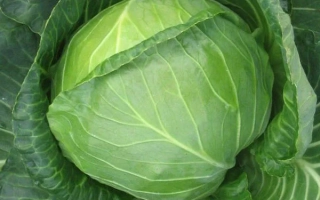
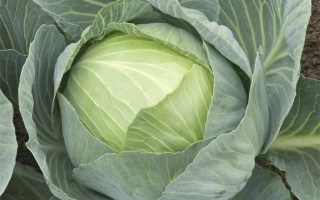
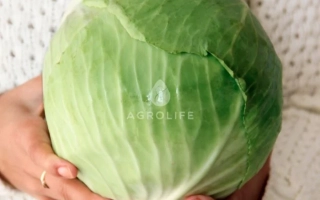
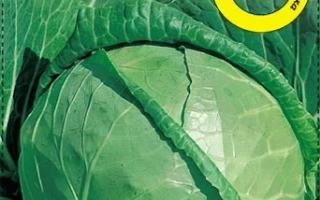
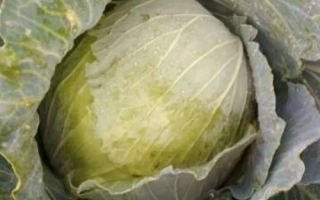
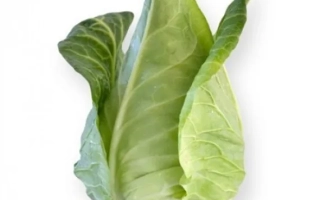
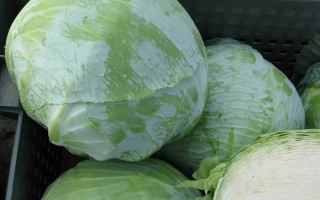
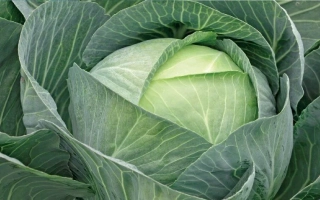
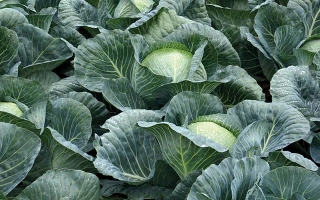
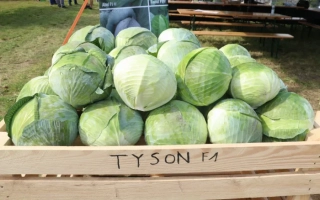
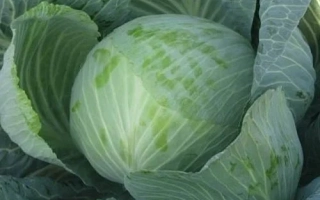
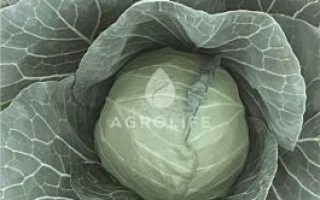
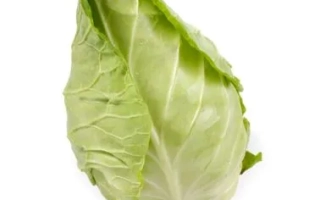
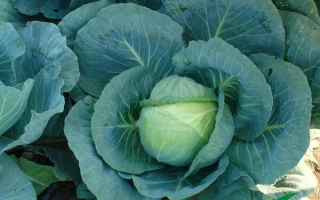
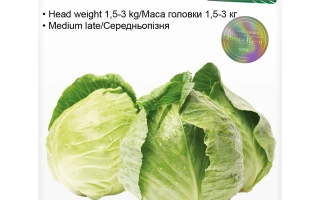
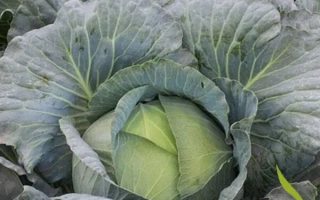
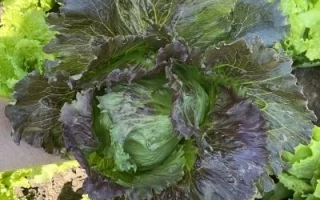
Slavanova cabbage is a medium-early, high-yielding variety of head cabbage, characterized by large, dense, and juicy heads with a pleasant dark green hue. The average head weight ranges from 3 to 3.5 kg, though it can vary from 2 to 4 kg. The heads have medium density, and the leaves are thin, tender, with a waxy coating and white flesh when cut. This variety is distinguished by its excellent taste, making it suitable for fresh consumption, processing, and marketing. Due to its uniform maturation, harvest occurs from August to September, with the cabbage maintaining high commercial quality throughout the harvesting period.
The vegetation period of this variety is 75-80 days from transplanting seedlings, classifying it as medium-early. For cultivation, the seedling method is recommended: seeds are sown in March-April in greenhouses or polytunnels, and seedlings are transplanted into open ground at the end of April to early May depending on weather conditions. The optimal planting scheme is 60x40 or 50x50 cm, allowing approximately four plants per square meter. Slavanova cabbage is cold-tolerant but requires moisture and fertile soil, regular fertilization, and responds positively to fertilizer application.
The variety exhibits high resistance to fusarium, enhancing its reliability in cultivation. The plant's root system is well-developed, facilitating efficient nutrient uptake. The hybrid has good transportability and high commercial value — up to 90-95% — making it attractive for commercial production. Cultivation under cover (plastic film, agrofabric, greenhouses) is also recommended, enabling maximum yield and product quality. Slavanova cabbage is a significant source of vitamins K and C, making it a valuable and in-demand crop.