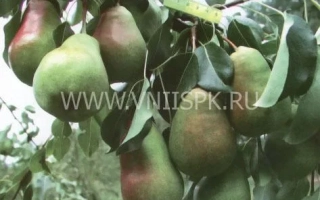
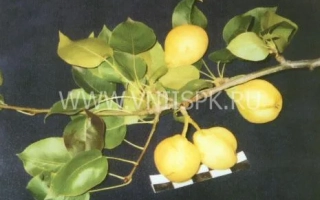
Early autumn variety selected at the Sverdlovsk Selection Station for fruit growing by L. A. Kотов and G. N. Tarasova from a cross in 1975 between number 2-39 and the variety Pervenets. In 2004 it was included in the State Register of Selection Achievements approved for use in the Volga-Vyatka region. It spreads rapidly in Sverdlovsk, Perm, Chelyabinsk regions, Udmurtia, and Bashkortostan.
Trees are medium-sized, fast-growing, with slender, non-dense, broad-pyramidal, sturdy crowns that naturally form easily. Branches emerge from the trunk at an obtuse angle, sloping upward. Leafiness is moderate. Bark color on the trunk is dark gray, on scaffold branches it is greenish-dark gray. Fruit set is concentrated on spurs and buds. Buds are sessile, and with age they become branched.
Shoots are straight, medium thickness, with medium-length internodes, olive-green color, many buds, large. Buds on shoots are strongly deviated, large, elongated, acute. Leaves are large, elongated, broad-lanceolate in shape, dark green, finely serrated, glossy, glabrous. Blade is directed downward, slightly folded (upward) along the central vein; base and apex are wedge-shaped, margins curled downward. Flowers bloom in mid-season.
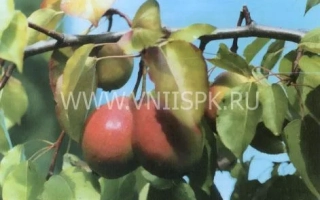
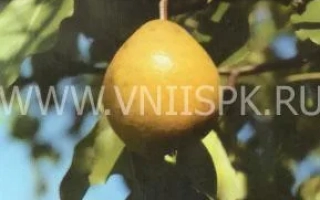
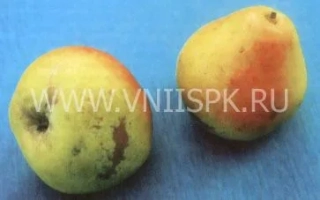
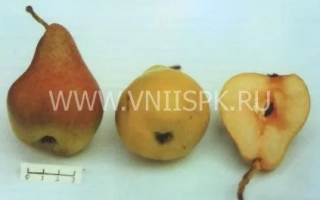
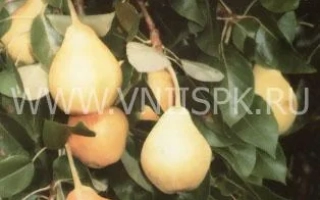
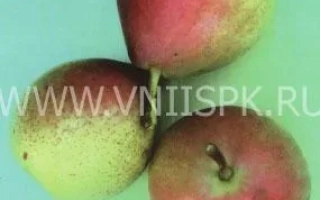
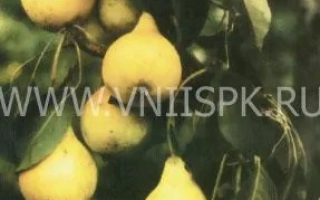
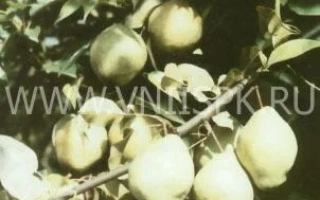
Fruits are medium (145 g) to above medium size (190 g), one-dimensional, elongated lemon-shaped or pear-shaped, equal-sided, widest diameter in the middle of the fruit, smooth surface. Main color is dark green, later turns yellow-green with a blurred, striped brown-red color of moderate intensity on the lower part of the fruit. Skin is dry, matte. Peduncle is long, fairly thick, slightly curved, erect. Calyx is half-open, subcalyx tube small. Seed number is moderate, elongated, medium-sized, brown.
Flesh is yellowish, medium density, very juicy, tender, without stone cells, excellent sour-sweet flavor (rating 4.7-4.8 points). Appearance is attractive.
Fruits ripen by September 1st and are consumed over 30 days, meaning in Yekaterinburg they are classified as early autumn ripening.
Fruits do not drop off at maturity. Fresh fruit transportability and marketability are good. Main use is fresh consumption, suitable also for various processing methods.
Fruit production begins in the 4th-5th year after grafting. No poor pollinators have been identified. Yield is good, annual.
Resistance to winter frosts and spring frosts during flowering is good. The variety is resistant to scab and practically unaffected by pear gall mite.