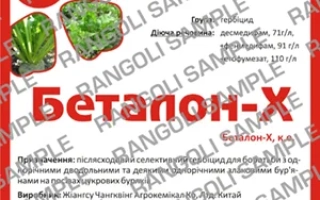
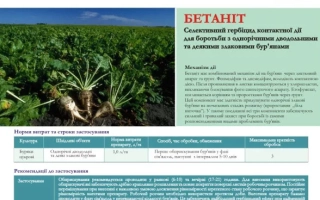
Advantages:
• not phytotoxic to crops under various weather conditions
• effective against a wide range of weeds
• registered for cereal crops with clover and alfalfa intercropping
• wide application window
Active ingredient
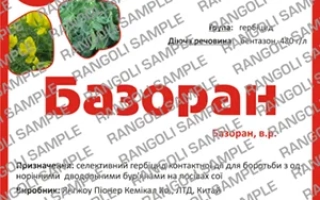
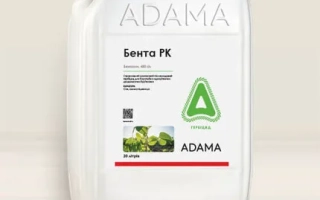
bentazon (480 g/l)
Formulation
aqueous solution (AS)
Base unit
20 l
Mode of action
Bentazon has strong contact action and is mainly absorbed by green plant parts. The active ingredient disrupts the photosynthesis process. Weed death becomes apparent within 3-5 days.
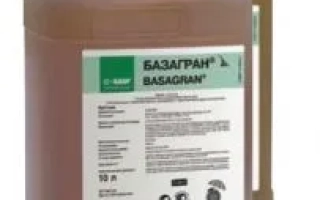
BAZAGRAN® is the only herbicide that completely eradicates annual broadleaf weeds, including those resistant to 2,4-D and 2,4-DX.
Advantages of BAZAGRAN® herbicide:
· highly effective against broadleaf weeds in the following crops: cereals (barley, wheat, rye, oats), cereal intercrops (clover, alfalfa), legumes (clover, alfalfa), legume-cereal mixtures (soybean, pea, bean)
· excellent tolerance by all the aforementioned crops
· long application window
· easy to handle
· enables clean clover seed harvest, completely eliminating the problem of cleaning clover seeds from hard-to-separate weed seeds (sticky beggarweed, species of chamomile, plantain, purslane, bindweed, etc.)
· significantly reduces pre-harvest losses and harvest losses
Action of BAZAGRAN® herbicide.
BAZAGRAN® is a contact herbicide and is mainly absorbed by green plant parts. For good results, herbicide must sufficiently wet the leaves and stems of weeds. Weed death occurs more slowly compared to herbicides from other groups. Cold weather slows down the onset of this herbicide's action. BAZAGRAN® can be applied only after crop emergence. Weeds must have emerged by the time of application.
Due to its excellent selectivity, the herbicide application timing is determined not by crop development stage but by weed development stage, which should not exceed 2-4 leaves. Application should be carried out no later than the point when the growing crop covers weeds from herbicide solution exposure.
Cereals with intercropping
Sowing cover crops. Clover, alfalfa, and cereals can be intercropped into cereals several days after BAZAGRAN® herbicide application.
Cereal crops with emerging clover (red and white), alfalfa, and legume-cereal mixtures can be treated after legumes have developed their third trifoliate leaf. Cereals should have reached the three-leaf stage.
Alfalfa
The primary application areas of BAZAGRAN® herbicide in alfalfa are new plantings and seed production plots. Due to its selectivity, the herbicide can be applied even in the first year of alfalfa planting. On seed plots, it is especially important that the crop grows without weeds and the alfalfa harvest is free from weed seeds.
Red and white clover
On established clover plantings, BAZAGRAN® should be applied when plants reach 10-15 cm height. On new plantings, from the third trifoliate leaf stage. Avoid spraying when temperature exceeds 20 °C. Trials on red clover plantings in the first and second growing seasons, including seed plots, have shown that the herbicide is effective during spring regrowth and up to the beginning of stem elongation (at plant height of 10-15 cm).
Soybean
BAZAGRAN® eradicates most broadleaf weeds in soybean, including difficult-to-control weeds such as black nightshade, white mustard, species of henbane, and species of groundsel. For grassy weeds, use ARAMO® 45 at 2.0 l/ha in the 2-4 leaf stage of annual weeds, when creeping thistle reaches 10-15 cm height.
Application timing. Due to BAZAGRAN®'s excellent selectivity in soybean, spraying is conducted at the 1-3 true leaf stage of the crop. Weed sensitivity and consequently the success of weed control increases as weeds are smaller at the time of application, i.e., herbicide application should primarily occur when weeds are small and
actively growing. At this stage (2 leaves), they are easier to eradicate with lower recommended doses. Typically, this period occurs between 14 and 21 days after soybean planting. Some weeds, such as species of nightshade, prickly cleavers, field mustard, and species of groundsel, are still in active growth stages and are well controlled by the herbicide.
Pea
BAZAGRAN® should be used on pea at the 5-6 leaf stage of the crop. Spraying should ideally be conducted at temperatures not exceeding 20 °C. Avoid treatment before nighttime frosts.