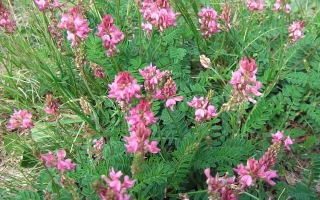
Sandy 1251 is a perennial herbaceous crop from the legume family, known for its high yield and resistance to sandy soils.
The plant reaches a height of 60 to 120 cm. Stems are erect, thick, and hollow, sometimes with woody bases. Leaves are pinnate, odd-pinnate, consisting of 6–10 pairs of lanceolate leaflets 1–3 cm long and about 0.5 cm wide. The panicle is spike-like, narrow, and finely pointed at the tip.
Sandy 1251 is characterized by a strong root system, which ensures good drought resistance and high winter hardiness. The culture is well suited for field legume sowing, greening slopes and sandy lands, as well as a fodder plant. Average seed yield ranges from 4 to 15 centners per hectare, with a sowing rate of 70–80 kg/ha in standard row sowing without cover.
The culture is valued among beekeepers due to its high honey-producing properties. In various regions, it yields from 22 to 47 centners of hay per hectare, not inferior to the yield of specialized lucerne varieties. High disease resistance makes it a reliable choice for farmers looking for a stable and productive option in sandy soil conditions.