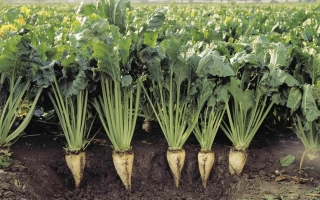
Sugar beet variety Selena is a medium-early hybrid with high sugar content, reaching 17.6-18%. The roots have a cylinder-cone shape with a smooth surface, which facilitates harvesting and reduces soil adhesion. Average root mass varies from 530 to 700 grams, and yield reaches 35-46 tons per hectare, significantly exceeding standard indicators. The plant is resistant to various climatic conditions, including heat and cold, as well as diseases such as Cercospora, powdery mildew, and root rot. The leaf rosette is semi-spreading, with leaves of medium size and moderately corrugated blades. The root system is taprooted, penetrating up to 2-2.5 meters deep, which contributes to good nutrition and drought resistance. The vegetation period is about 120-155 days, depending on growing conditions. The variety responds well to liming of soils and requires optimal acidity in the range of pH 6.5-7.5. Sowing is recommended when the soil warms up to 6-8°C at a depth of 6-7 cm with a sowing rate of 2-10 kg of seeds per hectare. Sugar beet Selena is universal in application: it is used for sugar and molasses production, as well as in cooking for making borscht and kvass. Due to the waste-free use of all parts of the plant, it also serves as a feed crop. High yield, resistance to adverse factors, and universality of application make this variety attractive for cultivation in various regions, including the Northwestern, Central, Lower Volga, and Ural.