


SKU #38008
·
32 views
Nezabudka
Barley
User rating
0 votes0% positive reviews
No ratings yet — be the first.
Plant Type
Annual
Plant Height
10-60
Registration year
2007
About product

A proven Ukrainian barley variety with high adaptability to local climatic conditions.
Plant Type
Annual
Plant Height
10-60
Registration year
2007
Description
Selection Heritage
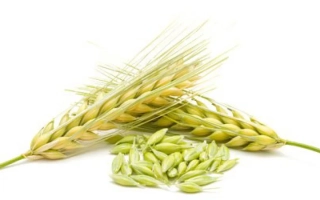
The «Nezabudka» barley variety is the result of focused breeding efforts by the Vinnitsa State Agricultural Research Station under the NAAS of Ukraine. In the current landscape of the Ukrainian agricultural market, where crop stability is valued above experimental hybrids, this variety has established itself as a reliable asset for domestic producers. It is an annual herbaceous crop whose morphological traits are optimized for efficient use in intensive farming systems.
Agronomic Profile
The variety shows consistent development metrics: plant height ranges from 10 to 60 cm, which simplifies field management and harvesting operations. As the originator is a state research institution, the genetic material of «Nezabudka» is specifically adapted to the soil and climatic zones of Ukraine, ensuring better resilience compared to many imported alternatives.
- Type: Barley variety.
- Originator: Vinnitsa State Agricultural Research Station (UAAS).
- Life Cycle: Annual herbaceous plant.
- Specifications: Stem height 10–60 cm.
Today, this variety is chosen by farms seeking a balance between moderate production costs and stable commercial grain yield. «Nezabudka» represents a commitment to proven Ukrainian breeding that has consistently demonstrated resistance to local environmental stressors over many years.
Crop & resistance
Crop
Specifications
| Plant Type | |
|---|---|
| Plant Height | 10-60 |
| Registration year | 2007 |
| Catalog | Catalog → Barley |
| Legal data |
Show · 1
|
| Country | Ukraine |
Store offers
Prices are updated on loadLoading offers…
Aggregator catalog: prices are collected automatically from store websites, normalized by AI and converted at the current exchange rate. Before ordering, confirm the price and availability on the store's website. This block is not indexed by search engines — the data is loaded after the page opens.
Not yet комментариев. Be the first!
Alternatives
Barley seeds · similar varieties


See also
Often considered together with this variety





Recently viewed
Products you’ve viewed on this site
Reviews · 0