


SKU #37833
·
57 views
Broadleaf
Barley
User rating
0 votes0% positive reviews
No ratings yet — be the first.
Plant Height
90-100cm
Seed; mass 1.000seeds
46-48 grams
Registration year
1987
About product

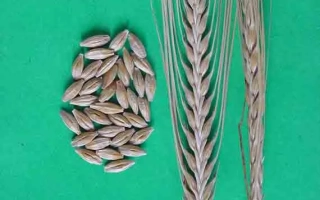
Broadleaf barley is a cereal crop intended for cultivation under various climatic conditions, including arid regions. It is characterized by high adaptability and increased tillering capacity, which contributes to high yields even under insufficient water supply. The vegetative period varies depending on the variety, typically ranging from 2 to 7 days compared to other varieties, allowing for opti…
Plant Height
90-100cm
Seed; mass 1.000seeds
46-48 grams
Registration year
1987
Description
Broadleaf barley is a cereal crop intended for cultivation under various climatic conditions, including arid regions. It is characterized by high adaptability and increased tillering capacity, which contributes to high yields even under insufficient water supply. The vegetative period varies depending on the variety, typically ranging from 2 to 7 days compared to other varieties, allowing for optimized sowing and harvest timing.
The productivity potential of broadleaf barley reaches 9-10.6 tons per hectare, with plant height ranging from 90-125 cm and 1000-grain weight approximately 46-48 grams. These characteristics make it attractive to agricultural producers aiming to achieve a stable and high yield. The recommended seeding rate is 180-250 kg per hectare, ensuring optimal plant density and growth.
To protect broadleaf barley from weeds such as purple nettle, herbicides based on the active ingredient florasulam are applied. These products effectively eliminate harmful organisms, contributing to crop health and productivity. Utilizing modern cultivation technologies and protective agents allows to fully unlock the potential of broadleaf barley and ensure high yields.
The productivity potential of broadleaf barley reaches 9-10.6 tons per hectare, with plant height ranging from 90-125 cm and 1000-grain weight approximately 46-48 grams. These characteristics make it attractive to agricultural producers aiming to achieve a stable and high yield. The recommended seeding rate is 180-250 kg per hectare, ensuring optimal plant density and growth.
To protect broadleaf barley from weeds such as purple nettle, herbicides based on the active ingredient florasulam are applied. These products effectively eliminate harmful organisms, contributing to crop health and productivity. Utilizing modern cultivation technologies and protective agents allows to fully unlock the potential of broadleaf barley and ensure high yields.
Crop & resistance
Crop
Specifications
| Plant Height | 90-100cm |
|---|---|
| Seed; mass 1.000seeds | 46-48 grams |
| Registration year | 1987 |
| Catalog | Catalog → Barley |
| Legal data |
Show · 1
|
| Country | Ukraine |
Store offers
Prices are updated on loadLoading offers…
Available at: Agrodrug
Aggregator catalog: prices are collected automatically from store websites, normalized by AI and converted at the current exchange rate. Before ordering, confirm the price and availability on the store's website. This block is not indexed by search engines — the data is loaded after the page opens.
Not yet комментариев. Be the first!
Alternatives
Barley seeds · similar varieties
NUTANS 553
Federal Agrarian Scientific Center of the South-East
034 10 offers
2.12 €per 1 kg ≈ 109 ₴






See also
Often considered together with this variety




Recently viewed
Products you’ve viewed on this site
Reviews · 0