


SKU #60278
·
32 views
Ladoga
Apple
VIM FNAZUser rating
0 votes0% positive reviews
No ratings yet — be the first.
Type of Sort
Winter Apple Variety
Tree; Growth Power
Slightly Undergrown
Tree; Canopy Shape
Round Canopy
Fruit; Fruit Shape
Flat-round
Prices in stores
from6.01 €per seedling
pack from 12.02 € per pack
12 offers from 3 stores
Store offers · 12 from 3 stores
Prices are updated on loadLoading offers…
Available at: Зелёная Фазенда · Королевский сад · Плодовый питомник
Aggregator catalog: prices are collected automatically from store websites, normalized by AI and converted at the current exchange rate. Before ordering, confirm the price and availability on the store's website. This block is not indexed by search engines — the data is loaded after the page opens.
About product

The Ladoga apple variety is a late-winter variety bred at the Leningrad Fruit and Vegetable Experimental Station by crossbreeding the Antonovka and Borsdorfnaya varieties. The tree is semi-dwarf, reaching a height of up to 4 meters, and has a compact, rounded crown of medium density. Leaves are dark green, wrinkled, and shiny, while shoots are of medium thickness with closely spaced buds. The vari…
Type of Sort
Winter Apple Variety
Tree; Growth Power
Slightly Undergrown
Tree; Canopy Shape
Round Canopy
Fruit; Fruit Shape
Flat-round
Description
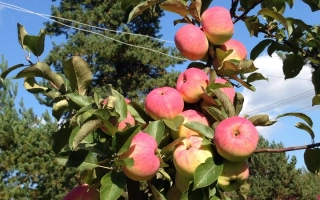
The Ladoga apple variety is a late-winter variety bred at the Leningrad Fruit and Vegetable Experimental Station by crossbreeding the Antonovka and Borsdorfnaya varieties. The tree is semi-dwarf, reaching a height of up to 4 meters, and has a compact, rounded crown of medium density. Leaves are dark green, wrinkled, and shiny, while shoots are of medium thickness with closely spaced buds. The variety is distinguished by high winter hardiness and resistance to scab, making it particularly suitable for cultivation in north-western regions. Ladoga apple fruits are flat-round in shape and of medium size—about 115 grams. The skin is smooth, matte, dense, and dry, light green in color, turning greenish-yellow or light yellow when ripened with a slight brownish-red blush. The flesh is white, dense, and juicy with a good sweet-sour taste. The chemical composition of the fruits includes a sugar content of about 9.8%, titratable acids of 0.65%, and ascorbic acid of 15 mg per 100 grams. Fruits ripen at the end of September to early October, reach harvest maturity, and can be stored until February-March and even longer, allowing them to be used for fresh consumption during the winter period. The Ladoga variety is early-bearing, entering fruiting age in the fourth or fifth year after planting. Yield is high and regular; from a seventeen-year-old tree, you can obtain from 40 to 60 kilograms of apples, and the maximum yield reaches 100 kilograms. Due to excellent recovery ability and disease resistance, this variety is a reliable choice for gardeners seeking quality winter apples with a long storage period.
Crop & resistance
Disease resistance
Specifications hover over for a hint about the specification
Not yet комментариев. Be the first!
Alternatives
Apple saplings · similar varieties


PIONER SEVERA
ФГБНУ Федеральный Аграрный Научный Центр Северо-востока имени Н.В. Рудницкого
041 3 offers
4.31 €per seedling ≈ 222 ₴
See also
Often considered together with this variety



Recently viewed
Products you’ve viewed on this site
Reviews · 0