
Cassava mosaic
Potexvirus marmormanihotis
The disease is caused by a virus belonging to the Potexvirus genus. It is a systemic pathogen that specifically affects cassava and related plant species.
What the section contains
Cassava mosaic
The virus is primarily transmitted through mechanical injury during cultivation practices or by using infected cuttings as propagation material.
Once inside the host, the virus replicates rapidly, interfering with the production of chlorophyll and disrupting the plant's metabolic pathways.
The stability of the viral particles allows them to remain viable on tools or in plant residues for extended periods, facilitating easy spread across fields.
Host specificity is high, meaning the virus relies on continuous planting cycles to survive in agricultural environments.
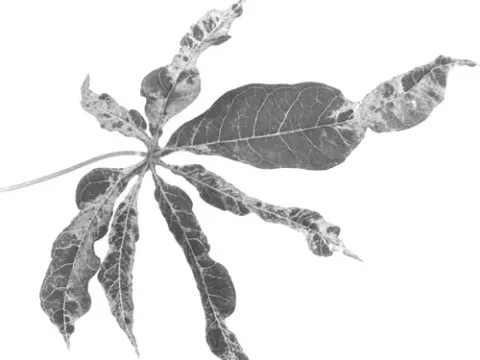
The most prominent symptom is a characteristic mosaic pattern on the leaves, featuring alternating light and dark green areas or chlorotic patches.
Infected leaves often show signs of curling, wrinkling, or significant deformation, resulting in a stunted appearance of the foliage.
Shoot development is frequently slowed down, leading to shortened internodes and an overall dwarfed habit of the cassava plant.
In severe infections, necrosis may appear on stems or leaf stalks, indicating a systemic breakdown of the plant's internal structure.
The lack of chlorophyll significantly reduces the leaf's ability to photosynthesize, which manifests as reduced vigor across the entire plant.
The primary economic impact is a drastic reduction in root tuber yield, which is the main marketable product of the cassava crop.
Yield losses can be catastrophic, as the plant fails to accumulate sufficient starch reserves in the roots due to chronic disease stress.
Transmission through vegetative propagation means that infected stock will inevitably result in widespread disease in subsequent planting seasons.
The quality of the tubers is often compromised, making them smaller, misshapen, and less suitable for food processing or market sale.
Chronic infection drains the plant's resources, making it susceptible to secondary stressors such as pests or drought, further exacerbating crop failure.
The cornerstone of disease management is the exclusive use of virus-free, high-quality propagation material sourced from certified nurseries.
Rigorous sanitation protocols for farm equipment are essential, as clean tools prevent the mechanical transmission of the virus from infected to healthy plants.
Regular surveillance and roguing—the systematic removal of symptomatic plants—help limit the spread of the virus within the field.
- Selecting and breeding cultivars that demonstrate natural resistance to Potexvirus.
- Controlling alternative hosts, including specific weeds, near the growing area.
- Maintaining proper crop rotation to break the cycle of infection.
Integrated pest management strategies are vital to ensure long-term sustainability and to protect cassava yields from the negative impacts of mosaic disease.