
Carrot ring spot virus
Nepovirus cari
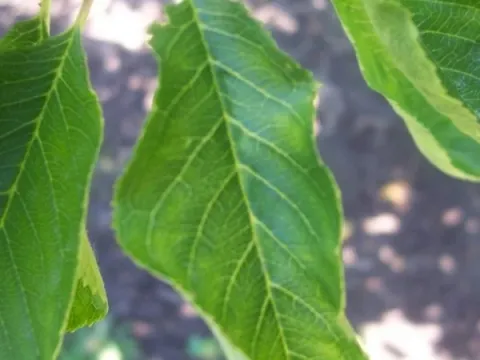
Symptoms of this viral infection primarily appear on carrot leaves as distinct chlorotic spots, which frequently develop into ring-like patterns. As the disease progresses, these rings can coalesce into intricate mosaics, sometimes accompanied by tissue necrosis.
What the section contains
Carrot ring spot virus
The overall growth and development of the infected plants are significantly hampered. Leaf blades become deformed and may curl at the margins, leading to a reduced photosynthetic area that stunts the entire plant.
Affected taproots often show slowed development, resulting in smaller and stunted crops. The surface of the roots may become rough or corky, significantly diminishing their market value and overall quality for consumers.
The infection is systemic, spreading throughout the plant tissues, which reduces turgor pressure and weakens the plant's natural defenses. Consequently, infected carrots become more susceptible to secondary bacterial and fungal rot.
Visual diagnosis during the early stages is challenging because symptoms can mimic nutrient deficiencies or damage caused by soil-borne pests. Laboratory confirmation through ELISA or PCR methods is recommended for accurate identification.
The causal agent is a virus belonging to the genus Nepovirus, a group of plant pathogens known for their ability to persist in the soil. These particles are isometric in structure and contain single-stranded RNA.
A key biological characteristic of nepoviruses is their high stability in the environment. They can survive in infected plant debris and soil for extended periods, remaining viable until conditions favor the infection of new hosts.
Weeds growing along field margins act as the primary natural reservoir for the virus. Through their root systems, the virus can persist in the soil and be transmitted to subsequent carrot crops.
In nature, the virus is primarily transmitted by soil-dwelling nematodes, specifically those from the genera Longidorus and Xiphinema. These micro-worms acquire the virus while feeding on infected roots and transmit it to healthy plants.
Apart from nematode transmission, mechanical spread is possible through contaminated farm machinery or tools, as well as physical contact between injured leaves of healthy plants and diseased vegetation.
The spread of the virus is closely tied to the activity of nematode vectors. Optimal conditions for nematode reproduction include high soil moisture and moderate temperatures, which coincide with the highest risk periods for viral infection.
Soil structure plays a critical role in disease propagation. Light, well-aerated sandy or peaty soils are most favorable for nematode migration, allowing the virus to spread much faster than in heavy clay soils.
Outbreaks are frequently observed in fields with poor crop rotation practices, where carrots are grown consecutively. This enables the buildup of virus-carrying nematode populations within the soil profile over several years.
Environmental stressors such as drought or sudden temperature fluctuations weaken the carrot plants, making their roots more susceptible to virus entry, especially if the root system has suffered minor physical damage.
High planting density contributes to the rapid spread of the virus through mechanical contact during routine cultural practices like weeding or hoeing, particularly if tools are not disinfected between field segments.
The primary economic impact of the virus is a sharp reduction in yield, which can decrease by 30-50% depending on the severity of the infection. Roots are often unmarketable due to small size and deformities.
Infection results in substantial economic losses, as the produce fails to meet quality standards. Furthermore, infected carrots exhibit poor storability, making them highly susceptible to decay during winter storage and transport.
The virus suppresses the plant's physiological processes and metabolic functions. This reduces the content of essential vitamins, sugars, and micronutrients, thereby lowering the overall nutritional value of the final produce.
Fields infected with nepoviruses are unsuitable for producing high-quality seed crops, as the virus can potentially be transmitted through seeds, leading to weakened progeny in future generations.
Long-term harm stems from the virus’s persistence in the soil, which restricts the land's utility for growing sensitive vegetable crops for several years unless intensive soil remediation measures are applied.
Strict crop rotation is the primary preventative measure. It is recommended not to plant carrots on the same plot for at least 4-5 years, rotating instead with non-host crops to starve out the nematode vectors.
Systematic weed control around fields is essential, as weeds serve as viral reservoirs and habitats for nematodes. Clearing margins of perennial weeds significantly reduces the infectious pressure.
If symptoms are detected in early stages, infected plants should be promptly rogued, including their root zone, and destroyed to prevent further transmission of the pathogen throughout the plot.
Nematode control methods include deep plowing, adjusting soil pH through liming, and planting cover crops (such as mustard) known to have bio-fumigant properties against soil pests.
- Utilizing certified disease-free seeds.
- Regular disinfection of farming tools and machinery.
- Continuous monitoring of soil nematode populations.
- Providing balanced nutrition to boost plant vigor and resistance.