
Cassava vein mosaic virus
Cavemovirus venamanihotis
Description
Symptoms
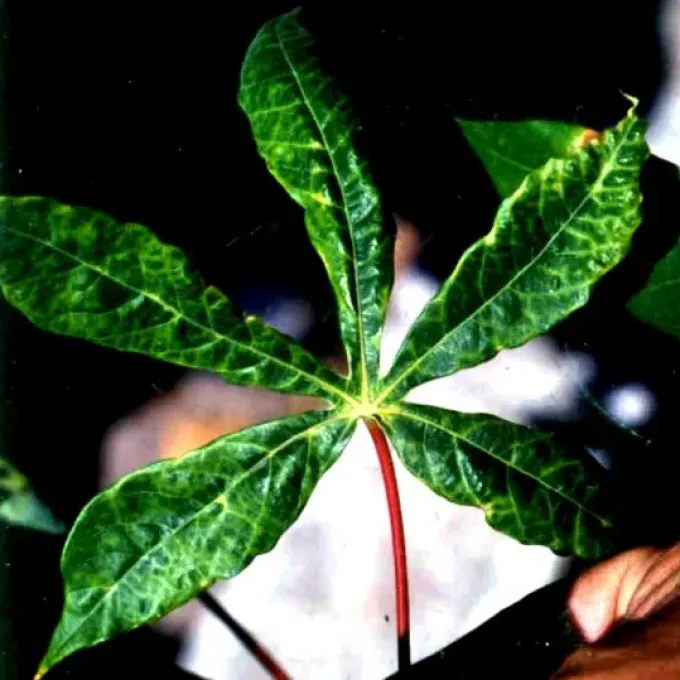
The most diagnostic symptom of the disease is a distinct chlorotic pattern along the veins of the leaves, resembling a mosaic or netted appearance.
As the disease progresses, leaves often become distorted, curled, or stunted, significantly reducing the plant's capacity for photosynthesis and energy production.
Plants infected with the virus typically exhibit stunted growth, reduced internode length, and an overall smaller stature compared to healthy cassava crops.
The severity of leaf symptoms can vary depending on the plant variety and environmental conditions, ranging from mild vein clearing to intense chlorotic patterns.
- Chlorotic vein clearing and netting
- Leaf distortion and curling
- Stunted growth and reduced plant height
- Shortened internodes
- Significant decrease in tuber yield
Pathogen
The causative agent of the disease is the Cassava vein mosaic virus (CVMV), belonging to the genus Cavemovirus in the family Caulimoviridae. It is a double-stranded DNA virus that specifically infects cassava (Manihot esculenta).
The virus is primarily transmitted through the use of infected vegetative cuttings, which serve as the main source of dissemination during the planting season.
Mechanical transmission is also possible, often occurring via tools used for pruning or harvesting if those tools are not properly disinfected between plants.
Insect vectors, particularly whiteflies, play a significant role in transmitting the virus from diseased plants to healthy ones within the field and to neighboring plots.
The infection is systemic, meaning the virus moves through the phloem of the plant, colonizing all tissues and persisting throughout the entire lifespan of the cassava plant.
Conditions for development
The prevalence of Cassava vein mosaic virus is highest in tropical regions where environmental conditions favor both plant growth and the proliferation of insect vectors.
The population dynamics of whiteflies are crucial; high densities of these insects lead to rapid viral spread across large plantation areas.
Warm and humid conditions accelerate both the life cycle of the insect vectors and the development of the viral infection within the plant tissue.
Poor agricultural practices, such as the continuous reuse of cuttings from non-tested fields, facilitate the buildup of the viral load over successive seasons.
Lack of crop rotation and proximity to other host plants that may harbor the virus contribute to the persistence of the disease in agricultural landscapes.
Why it matters
The primary economic impact of this virus is a significant reduction in the quantity and quality of starch-rich tuberous roots, which are a vital food source.
Affected plants suffer from poor root development, leading to smaller, less productive tubers that do not meet market or industrial standards for processing.
The systemic weakness induced by the virus makes the plants more susceptible to opportunistic pathogens, including secondary fungal infections that rot the roots.
Total yield losses in highly infected fields can be devastating for subsistence farmers who rely on cassava as their primary calorie source.
The virus limits the genetic improvement and trade of cassava materials globally due to strict quarantine measures required to stop its spread.
Protection
The fundamental strategy for control is the use of virus-free planting material, which should be obtained through certified tissue culture programs and thermotherapy.
Strict phytosanitary practices, including the systematic roguing (removal and burning) of any symptomatic plants, are essential to minimize the source of inoculum.
Integrated Pest Management (IPM) focusing on the control of whitefly populations is necessary to break the cycle of viral transmission between plants.
Implementing strict quarantine protocols for the movement of cassava cuttings between regions is vital for preventing the introduction of the virus into disease-free areas.
Ongoing research into developing resistant or tolerant cassava varieties is the most sustainable approach to mitigating the long-term threat of CVMV.
Discussion
No discussions yet — be the first.