
Cassava frogskin disease
Phytoreolike virus
Cassava frogskin disease is caused by a virus generally identified within the group of phytoreolike viruses (Phytoreolike virus).
What the section contains
Cassava frogskin disease
The virus acts as a systemic pathogen, colonizing the plant's vascular tissue and interfering with the transport of photoassimilates.
Transmission of the disease primarily occurs through insect vectors, specifically certain species of leafhoppers that acquire the virus while feeding.
The pathogen is known for its ability to persist in vegetative cuttings, which facilitates its widespread dispersal through contaminated planting material.
Scientific research indicates that the viral complex can vary, but the characteristic symptoms remain consistent across susceptible cassava genotypes.
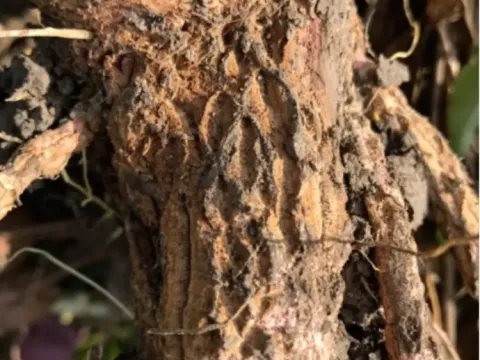
The most distinctive symptom is the development of rough, corky, and scaly skin on the roots and stems, resembling the texture of a frog's skin.
Above-ground, affected plants often exhibit stunted growth, shortened internodes, and significant foliage deformation, such as leaf curling.
The roots of infected plants show restricted development, appearing thin, woody, and lacking the normal starch accumulation expected in healthy tubers.
Chlorosis and mosaic patterns may appear on leaves, reflecting the overall physiological stress caused by the systemic viral infection.
In advanced stages, the plant architecture becomes visibly distorted, and the roots may fail to enlarge, rendering them commercially worthless.
The disease thrives in tropical environments where high temperatures and humidity support large populations of insect vectors.
Dense planting patterns can facilitate the rapid movement of vectors between plants, accelerating the spread of the virus across the field.
The use of infected stem cuttings is the primary driver for the long-distance movement and establishment of the disease in new areas.
Weed infestation in or near fields provides a reservoir for both the virus and the insect vectors during fallow periods.
Poor soil management and inadequate nutrient supply can exacerbate the severity of symptoms, making plants more susceptible to viral impact.
Cassava frogskin disease causes severe economic damage by drastically reducing the yield and quality of marketable cassava roots.
The tubers produced by infected plants are often hard, fibrous, and of poor culinary or processing quality, leading to substantial crop losses.
Because the disease is systemic, infected plants rarely recover, and they serve as continuous sources of inoculum for healthy neighbors.
The loss of high-quality planting material forces farmers to incur additional costs for sourcing disease-free stems.
In regions where cassava is a staple food, this disease poses a significant threat to local food security and agricultural productivity.
The primary control strategy involves the exclusive use of virus-indexed, disease-free planting material sourced from certified nurseries.
Field sanitation is essential, requiring the immediate roguing and safe disposal of any plants displaying symptoms of the disease.
Managing insect vector populations through targeted pesticide application can help reduce the rate of new infections in the field.
Implementing crop rotation cycles and maintaining spatial isolation from older, infected fields are critical for preventing disease spread.
Regular monitoring of cassava plantations allows for early detection, which is crucial for containment and minimizing the impact of outbreaks.