
Cassava potexvirus
Potexvirus ecsmanihotis
Cassava potexvirus (Potexvirus ecsmanihotis) is a viral pathogen belonging to the Potexvirus genus within the Alphaflexiviridae family. The virus is characterized by a positive-sense single-stranded RNA genome and filamentous virions.
What the section contains
Cassava potexvirus
This virus is an obligate intracellular parasite that replicates exclusively within living plant cells. It is capable of systemic infection, moving through the vascular system to colonize almost all parts of the cassava plant.
A key biological feature of this pathogen is its ability to persist in vegetatively propagated materials. Consequently, infected cuttings serve as the primary reservoir for the virus in agricultural settings.
The virus does not strictly require insect vectors for primary transmission, as it is readily transmitted mechanically through physical contact and injuries to plant tissues.
Genetic variability of the pathogen presents a significant challenge for breeders, as it complicates the development of long-term resistant cassava cultivars in endemic areas.
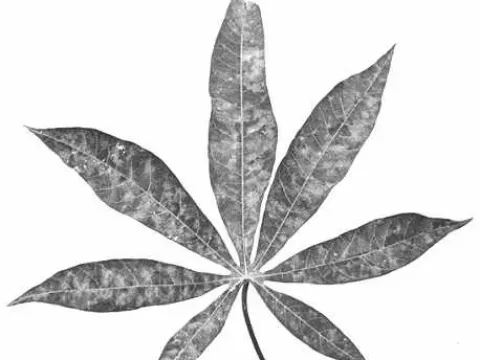
Early symptoms of cassava infection often manifest as mosaic patterns on the leaves, where leaf tissue displays alternating patches of light green and dark green coloration.
Significant leaf deformation is common, presenting as curling, crinkling, or a reduction in total leaf surface area, which ultimately impairs the plant's photosynthetic capacity.
In cases of severe infection, plants exhibit a marked reduction in growth and overall vigor. The cassava bushes appear stunted and fail to reach the normal dimensions characteristic of the variety.
Vein chlorosis is another specific symptom, where the areas surrounding the veins turn yellow, eventually progressing to a generalized yellowing of the entire vegetative apparatus.
The root system of infected plants is also negatively affected: the development of storage roots (tubers) is slowed, leading to lower density and a substantial reduction in total biomass yield.
The spread of the virus occurs primarily through the use of infected planting material. Utilizing cuttings from diseased plants guarantees the introduction of the infection into new fields.
Mechanical transmission is a major factor during routine agricultural operations. Tools used for pruning, harvesting, or soil preparation become effective vectors for spreading the virus between plants.
Contact between healthy and diseased plants, often caused by strong winds or high-density planting, facilitates the transmission of viral particles through micro-abrasions in the leaves.
Favorable growth conditions for cassava, such as high humidity and optimal temperatures, also support the rapid replication of the virus and its systemic movement throughout the plant.
Continuous monocropping without adequate rotation allows for the accumulation of the virus in the soil and plant debris, maintaining a constant source of infection in the field.
The primary economic impact of Cassava potexvirus is a significant reduction in crop productivity. Infected plants produce substantially lower yields of starch-rich tubers.
The virus degrades the quality of the harvest, as the starch content of the tubers decreases and their marketability is reduced due to visible deformities and poor tuber development.
Infection compromises the plant's natural immune system, leaving it more susceptible to secondary fungal and bacterial diseases that often aggravate the overall viral impact.
In agricultural systems, the unchecked spread of the virus leads to the degradation of high-quality varieties, eventually making the cultivation of specific cultivars economically unviable.
Total economic losses are driven by direct yield reductions, the necessity of replacing planting stocks, and the implementation of expensive phytosanitary protocols.
The primary prevention strategy is the exclusive use of virus-free planting material. Certified cuttings, produced through meristem culture techniques, are essential for disease management.
Strict adherence to sanitation protocols for agricultural tools is required. Pruning knives and other equipment should be regularly disinfected using sodium hypochlorite or alcohol solutions.
Regular monitoring of plantations is vital to identify and remove (rogue) symptomatic plants, which prevents the secondary spread of the virus to healthy specimens.
Maintaining spatial isolation between new plantings and older, potentially infected sites minimizes the risk of primary viral introduction to healthy fields.
Implementing effective crop rotation and utilizing resistant cassava hybrids are the most robust long-term strategies for managing the impact of the virus in tropical agriculture.