
Clover blotch virus
Dianthovirus trifolii
Description
Symptoms
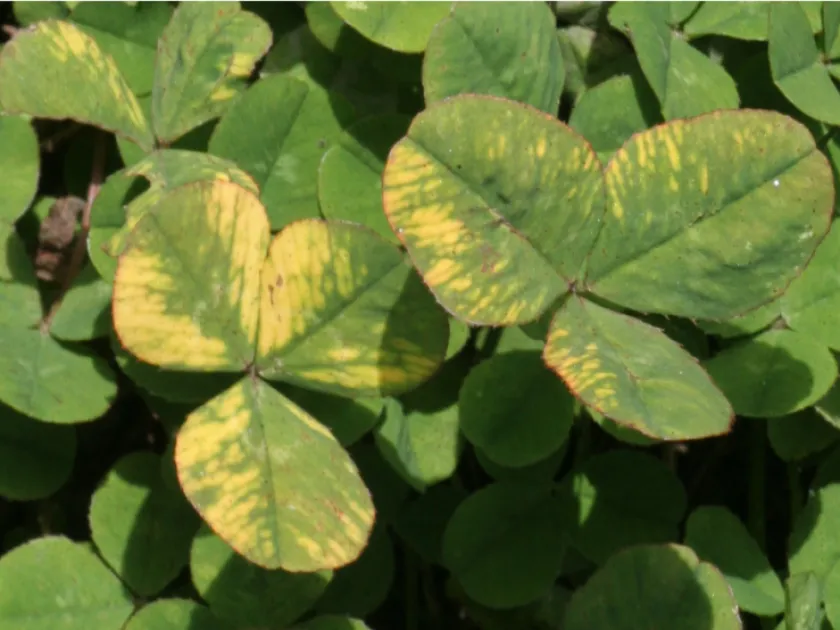
A primary sign of clover blotch virus infection is the appearance of chlorotic spots of various configurations on the leaf blades.
Often, a mosaic pattern is observed, which alternates with light or yellowish areas of the leaf tissue.
In some cases, infected plants may show general growth retardation, leading to deformation and curling of the leaf blade.
Symptoms can appear unevenly: some parts of the plant may show bright signs while other parts look healthy.
The photosynthetic surface area of infected specimens is significantly reduced, which negatively affects metabolic processes.
Pathogen
The causative agent of the disease is the clover blotch virus, belonging to the genus Dianthovirus.
It is a phytopathogenic virus with a specific RNA structure that primarily affects legumes.
In field conditions, virus transmission occurs mechanically through tissue damage and through the soil during root system contact.
Virions can persist in plant debris and the root systems of perennial plants for an extended period.
The biological activity of the pathogen depends directly on the metabolic state of the host plant, where viral replication occurs.
Conditions for development
The spread of infection intensifies in high-density crops, where there is a high risk of mechanical leaf damage.
Favorable conditions for virus transmission include moist soil, which promotes virion survival outside the host organism.
A moderate temperature range contributes to the accelerated development of the virus within plant tissues.
The presence of weeds in fields creates reservoirs for the virus, supporting its viability during the off-season.
Damage caused by pests or agricultural machinery creates entry points for the infection and accelerates its spread.
Why it matters
Clover blotch virus significantly reduces the biological productivity of legume grasses, causing a decline in green mass yield.
Infection of crops leads to a loss of nutritional value as the virus disrupts protein and carbohydrate synthesis.
Infected plants become less resistant to other pathogens, including fungal diseases and pests.
Reduced vigor leads to plant thinning in the stand, which gradually decreases crop density.
Ultimately, clover cultivation becomes less profitable due to the loss of raw material quality.
Protection
A key preventive measure is the use of certified seed material that is free from viral infections.
Strict crop rotation must be practiced, avoiding the return of clover to the same field for at least 4-5 years.
Regular weed management is an important stage of protection, as weeds can act as hidden carriers of the virus.
Timely application of insecticides is recommended to prevent the damage through which the pathogen penetrates.
Sanitary measures, such as removing infected foci and cleaning machinery after working in infested areas, significantly reduce the risk.
Discussion
No discussions yet — be the first.