
Ilarvirus
Ilarvirus av
Ilarvirus is a genus of plant pathogenic viruses belonging to the Bromoviridae family. The name stands for "Isometric Labile Ringspot virus," describing their physical characteristics and the typical symptoms they cause in host plants.
What the section contains
Ilarvirus
The virus particle is isometric and contains a tripartite genome consisting of positive-sense single-stranded RNA. These viruses are highly unstable and require the coat protein for successful infection and systemic movement within the host.
In nature, Ilarviruses are primarily transmitted through infected pollen during cross-pollination. This mechanism allows the virus to spread rapidly through orchards during the flowering season, making it difficult to control.
Vegetative propagation is another major transmission route. Using infected scion wood or rootstocks in grafting or budding ensures the virus is introduced into new plants, which is a common problem in commercial nursery practices.
The infection is systemic, meaning the virus moves through the phloem to invade all parts of the plant, including the roots and fruits. Once a plant is infected, there is no chemical cure to eliminate the virus from its tissues.
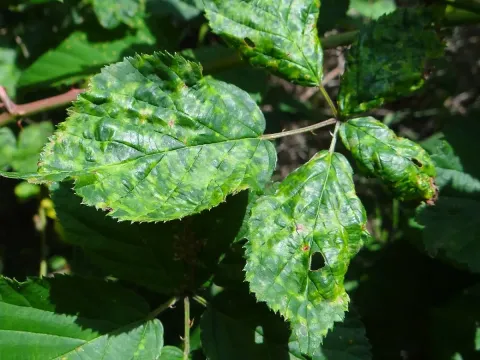
Symptoms often appear in the spring as chlorotic spots, lines, or rings on the leaves. In some cases, the patterns evolve into necrotic tissue, leading to leaf distortion and reduced photosynthetic capacity.
Stone fruits like cherries and plums often show "fire-blight-like" symptoms, where leaves appear scorched, curl up, and fall prematurely. This significantly weakens the tree's ability to store energy for the dormant season.
Fruit symptoms are common and include skin mottling, deformation, and corky textures, which render the harvest unsuitable for fresh market sales. The overall flavor profile and sugar content of the fruit are typically reduced.
Chronic infection results in stunting, shortened internodes, and a general decline in plant vigor. Over time, the trees become brittle and show reduced fruit set, leading to poor yields across the entire plantation.
Many Ilarviruses can remain in a latent state, where the plant carries the virus without showing obvious symptoms. These asymptomatic carriers act as hidden reservoirs, spreading the infection to healthy trees through pollen movement.
The development of an Ilarvirus outbreak is heavily dependent on the presence of infection sources nearby. Abandoned orchards or wild host species often harbor the virus, allowing it to migrate into commercial plantings.
Environmental conditions that favor active pollinator populations during bloom contribute to the spread of the virus. High activity of bees and other insects ensures that infected pollen is moved across long distances between susceptible trees.
Human activity is a major factor in virus dispersal. Using non-sterile pruning tools can spread the virus from an infected tree to a healthy one in seconds. Without strict sanitation, pruning can turn into a transmission event.
The use of uncertified planting material is the primary cause of global spread. Importing saplings from nurseries that do not practice rigorous virus indexing is a major risk factor for establishing the virus in new geographic regions.
Unlike some pathogens that require specific humidity or temperature, Ilarvirus spread is mostly governed by the host's phenology, especially the timing of pollination and nursery propagation cycles.
The economic impact of Ilarvirus is substantial, mainly due to the sharp decline in fruit quality and yield. Infected trees become unproductive, forcing growers to remove them prematurely and replant, which involves high costs.
Fruit deformation and quality degradation make the crop unmarketable for premium sectors. Farmers often face losses because their products fail to meet the strict standards required by retailers and processing plants.
Infected trees suffer from reduced winter hardiness. The metabolic stress caused by the virus makes them more susceptible to frost damage and secondary attacks by opportunistic pests or fungal pathogens.
Long-term health decline is typical, as the virus impairs root development and overall growth. This leads to early orchard decline, where the productive lifespan of the plantation is reduced by many years.
Nursery businesses face severe financial consequences if their stock is found to be virus-positive. Regulatory bodies may impose quarantine measures, leading to the destruction of entire batches of nursery products.
The cornerstone of Ilarvirus management is the use of certified virus-free planting material. Establishing a new orchard with clean stock is the only effective way to prevent the disease from the start.
Implement strict sanitation practices during pruning. Disinfect all tools (pruners, saws) using 5% sodium hypochlorite or alcohol solutions between each individual tree to prevent cross-contamination.
- Rogueing: Identify and remove symptomatic trees as soon as they are spotted to eliminate the local reservoir of the virus.
- Regular testing: Use ELISA or PCR methods to monitor mother blocks in nurseries to ensure they remain virus-free.
- Spatial isolation: Ensure that new orchard sites are located at a safe distance from old, unmanaged fruit trees or wild hosts.
- Improve tree health: Provide balanced fertilization and water management to help plants withstand the stress associated with viral infection, even if it cannot eliminate the virus.
As there are no curative antiviral pesticides, the focus remains entirely on prevention, quarantine, and systematic monitoring of plant health throughout the growing cycle.