
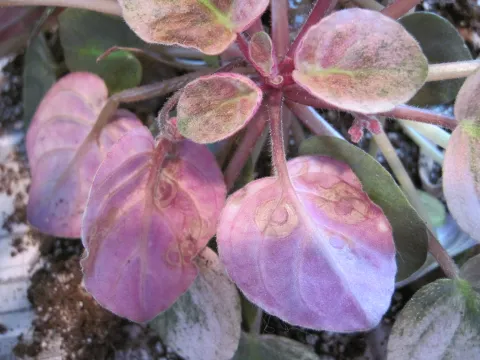
Impatiens necrotic spot virus
Ilarvirus snsv
Impatiens necrotic spot virus (INSV) is a destructive plant pathogen belonging to the genus Orthotospovirus within the family Tospoviridae. It is recognized as one of the most significant viruses affecting greenhouse-grown plants worldwide.
What the section contains
Impatiens necrotic spot virus
The virus has an exceptionally broad host range, infecting over 500 species of ornamental, vegetable, and weed plants. Its ability to thrive in diverse botanical families makes it a complex challenge for plant pathology management.
INSV is a systemic pathogen, meaning that once a plant is infected, the virus spreads throughout its entire vascular system, affecting leaves, stems, flowers, and even root structures.
The primary vector responsible for the transmission of INSV is the Western flower thrips (Frankliniella occidentalis). The virus is acquired by thrips larvae during feeding and remains infectious within the insect for its entire adult life.
Transmission can also occur via the movement of infected plant materials, such as cuttings or young seedlings, which often carry the virus in a latent stage, showing no immediate signs of illness.
Symptoms of INSV infection are highly variable and depend largely on the specific host plant, its growth stage, and environmental conditions. Common symptoms include chlorotic spots, ringspots, and necrotic lesions on the leaves.
In many species, the virus causes shoot dieback, stunting of overall growth, and curling or distortion of the foliage. These signs are often mistaken for nutrient deficiencies or fungal blight.
Flowers may exhibit irregular patterns, mottling, or color breaking, which significantly reduces the market value of ornamental crops. The necrotic areas can expand, leading to the collapse of specific plant parts.
In some plants, the virus can remain latent for weeks, showing no symptoms while the plant still acts as a reservoir of infection that can spread the virus to healthy specimens nearby.
Distinguishing INSV from other diseases often requires laboratory testing (such as ELISA or PCR), as symptoms may overlap with those caused by other Tospoviruses or physiological stress.
INSV causes severe economic losses in the floriculture and greenhouse vegetable industries. Once a plant is infected, there is no chemical cure available, making eradication the only viable management option.
The virus compromises the aesthetic quality of ornamental plants, rendering them unsalable. In food crops, it can lead to significant yield reductions and stunted fruit development.
Due to the efficiency of thrips as vectors, an undetected infection can lead to a rapid outbreak throughout an entire greenhouse facility in a short period.
The cost of implementing integrated pest management (IPM) to control thrips populations significantly increases production costs for greenhouse operations.
The presence of INSV can lead to total crop loss, damaging the reputation of a nursery and resulting in long-term financial consequences for the business.
The spread of INSV is intrinsically linked to the population dynamics of the Western flower thrips. Warm temperatures and high humidity create ideal conditions for rapid reproduction of these pests.
Greenhouses that lack proper weed control are at higher risk, as weeds can harbor both the virus and the thrips throughout the year, serving as a constant source of primary inoculum.
High planting densities encourage the movement of thrips between plants, facilitating the transmission of the virus. Poor ventilation and stagnant air may also contribute to pest buildup.
Human activity, such as moving plant trays or using shared tools without proper sanitation, can accidentally distribute the virus and its vectors across different sections of a greenhouse.
Weakened plant health, whether from overwatering or improper fertilization, can make plants more susceptible to initial infection and faster symptom development.
Effective management begins with rigorous thrips monitoring using yellow or blue sticky traps to track pest numbers and determine when to apply control measures.
An Integrated Pest Management (IPM) approach is essential, combining biological controls (such as predatory mites) with chemical insecticides to suppress thrips populations effectively.
Strict sanitation protocols must be enforced, including the immediate roguing and destruction of any plant showing suspicious symptoms to prevent further virus spread.
All incoming plant material should be kept in a separate quarantine area and inspected thoroughly before being introduced into the main production zone.
Maintaining a weed-free environment inside and around the greenhouse is crucial to eliminating the reservoirs that sustain thrips populations during off-seasons.