
Hostuviroid
Hostuviroid
Hostuviroid is a pathogenic viroid that serves as the specific causal agent of infectious diseases affecting plants of the Hosta genus.
What the section contains
Hostuviroid
This agent is classified as a subviral pathogen consisting of a short, single-stranded circular RNA molecule that does not encode any proteins.
The viroid hijacks the host plant's cellular machinery to replicate its genetic structure, leading to significant disruption of plant metabolism.
Unlike viruses, Hostuviroid lacks a protein coat (capsid), which renders it exceptionally resistant to environmental stress and degradation.
Its structure allows for systemic movement throughout the host plant, eventually infecting all organs, including leaves and root systems.
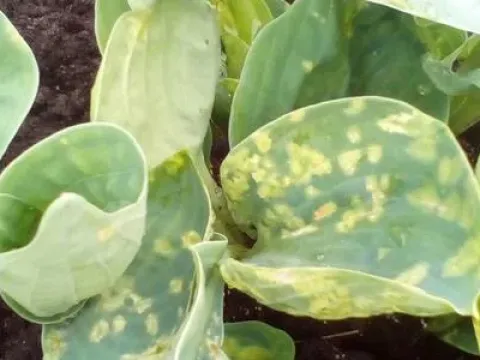
A primary symptom of Hostuviroid infection is the deformation of leaf blades, often resulting in wrinkling or asymmetrical growth patterns.
Infected plants frequently exhibit discoloration, such as chlorotic spots, pale streaking, or mosaic patterns developing along the leaf veins.
Hostas affected by this pathogen show significant growth retardation, appearing stunted and less vigorous compared to healthy specimens.
In advanced stages of infection, leaves may wither prematurely, and the plant's flowering capacity is drastically reduced or entirely suppressed.
Visual symptoms can vary significantly depending on the hosta cultivar, making early diagnosis without specialized laboratory testing difficult.
The most common mode of transmission is the use of non-sterilized gardening tools during plant division, trimming, or leaf pruning.
The viroid can persist in infected plant debris within the soil, though mechanical transmission remains the most critical vector for spread.
High planting density creates conditions where roots may become injured through proximity, facilitating the transfer of the viroid between plants.
While the role of sap-sucking insects in transmission is still being researched, direct mechanical transmission via contaminated tools is well-documented.
The active spring growth period provides optimal conditions for symptom expression due to the plant's highly intensive metabolic activity.
The damage caused by Hostuviroid is irreversible, as the systemic nature of the infection makes recovery of the plant impossible.
The disease leads to a complete loss of aesthetic value, which is particularly devastating for horticultural nurseries and plant collectors.
Systemic infection lowers the overall vitality of the hosta, leaving it highly susceptible to secondary fungal or bacterial pathogens.
Economic losses arise from the necessity to discard and incinerate infected planting stock to prevent the pathogen from spreading further.
Because there are no chemical treatments available for viroid infections in plants, the risk to an entire hosta collection is severe.
The only effective control measure is the immediate identification, removal, and destruction (by burning) of infected hosta plants.
Rigorous disinfection of all gardening tools using alcohol or bleach solutions between each plant is mandatory to stop the spread.
Purchasing new plants exclusively from reputable nurseries that employ strict phytosanitary controls is the best prevention strategy.
Maintain adequate spacing between hostas to reduce physical contact and conduct regular monitoring for any suspicious changes in leaf appearance.
New acquisitions should be kept in a quarantine zone for at least one full growing season before being introduced to the main garden collection.