
Incidianthi mosaic virus
Caulimovirus incidianthi
Description
Symptoms
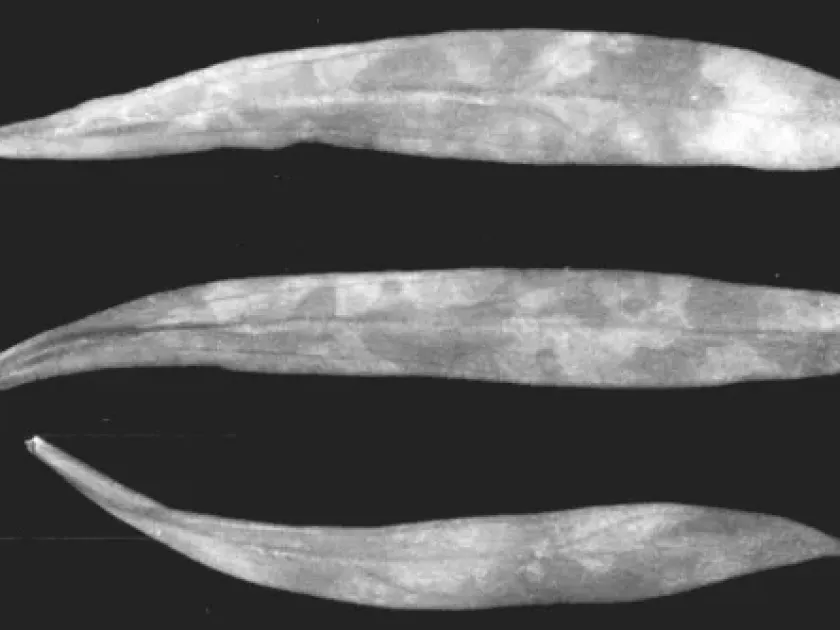
Disease symptoms manifest as a characteristic mosaic pattern on the leaf blade, consisting of alternating patches of light green, yellow, and dark green colors.
Affected plant leaves often become deformed, show signs of curling, and their margins may roll inward. Significant stunting and inhibited overall development of the crop are common observations.
During the generative phase, the virus affects flower formation, leading to pollen sterility or anomalous flower structures. When infected, fruits are often deformed, smaller in size, and lose their marketability.
- Vein yellowing (chlorosis) on leaves.
- Disruption of plant architecture.
- Appearance of necrotic spots in late stages.
- Reduced photosynthetic efficiency.
Visual diagnosis can be challenging as symptoms are often confused with micronutrient deficiencies or pest damage. Laboratory confirmation using ELISA is mandatory for an accurate diagnosis.
Pathogen
Incidianthi mosaic virus is an obligate intracellular parasite belonging to the Caulimovirus genus. This DNA-based virus primarily affects members of the Brassicaceae and certain Solanaceae families.
The pathogen resides in the plant's phloem tissues and spreads throughout the host organism. The viral particle features a unique genome structure, allowing it to efficiently utilize the host cell's enzymatic systems for its own replication.
Natural reservoirs of infection include perennial weeds that may remain asymptomatic throughout the winter. Virus transmission occurs mainly through mechanical contact or specific insect vectors, such as aphids.
A biological feature of this virus is its ability to remain virulent in plant debris and soil for long periods, especially if there is contact with the root system of susceptible crops.
Scientific studies confirm that the pathogen is prone to mutations, which complicates the breeding of resistant varieties. Molecular diagnostics is the only reliable way to identify the virus at early stages.
Conditions for development
Viral development is favored by moderate air temperatures, ranging between 18 and 25 degrees Celsius, which are optimal for the active replication of viral particles within host cells.
The presence of a high population of insect vectors is a critical factor for the onset of an epiphytotic outbreak. Aphids, moving from infected weeds to healthy crops, inoculate the virus into healthy tissues.
High humidity promotes vector activity, indirectly accelerating the spread of the disease across the field. Optimal conditions are frequently observed during the spring and summer periods in both greenhouses and open fields.
Mechanical damage caused to plants during cultivation promotes easier entry of the virus into the plant sap. Garden tools that have not been disinfected also become significant vectors of infection.
Failure to implement crop rotation and returning susceptible crops to the same location within less than 3–4 years creates an "infection pressure" that is extremely difficult to manage without changing agricultural practices.
Why it matters
The primary damage lies in a sharp reduction in yield, which can range from 30 to 70 percent depending on the infection timing and the susceptibility of the plant variety.
Produce harvested from infected plants loses its flavor quality and has an unappealing appearance, making it unfit for commercial sale in retail chains.
The virus exerts a suppressing effect on the root system, leading to decreased nutrient uptake from the soil and leaving the crop more vulnerable to secondary fungal infections.
Economic losses include not only direct revenue losses from lower yields but also the necessity of disposing of infected areas to prevent further regional spread of the virus.
The systemic nature of the infection makes it impossible to cure already infected plants, requiring their immediate removal from the field to protect neighboring healthy specimens.
Protection
Management of this virus relies on strict adherence to phytosanitary protocols and the prevention of vector pests on the farm during critical growth phases.
The use of virus-free planting material, propagated through tissue culture (in vitro), is the most effective method for preventing initial infection.
Systematic removal of weeds that serve as primary reservoirs of infection is necessary, alongside constant monitoring of aphid populations and other sap-sucking insects.
Regular disinfection of tools and equipment that come into contact with plant sap is recommended using specific alcohol-based or chlorine-based solutions.
Applying systemic insecticides to control vector populations significantly reduces the risk of secondary transmission of the virus throughout the growing season.
Discussion
No discussions yet — be the first.