
Indian peanut clump virus
Pecluvirus indicum
Indian peanut clump virus (IPCV) is a member of the Pecluvirus genus. It contains a segmented, single-stranded RNA genome that is highly specialized for survival within the soil environment.
What the section contains
Indian peanut clump virus
The biological cycle of this virus is strictly dependent on the soil-borne obligate parasite Polymyxa graminis, a plasmodiophorid fungus that acts as a vital vector for the virus.
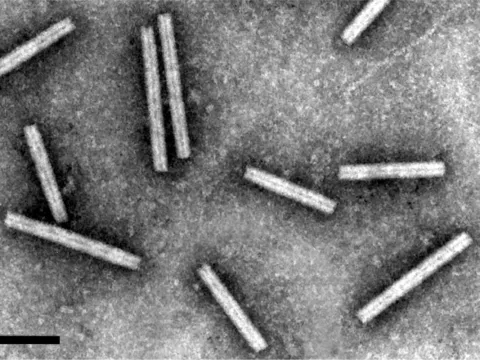
The viral particles are rod-shaped and possess a divided genome, a characteristic of all pecluviruses, which grants them high evolutionary plasticity and resilience.
The pathogen is known for its extreme persistence; it survives for many years inside the resting spores of the fungal vector, even when susceptible hosts are absent.
Transmission primarily occurs through the movement of infested soil during agricultural activities, as well as via irrigation water or runoff from heavy rainfall.
The most prominent symptom of IPCV is severe stunting, where infected plants remain significantly smaller and less developed compared to healthy specimens.
Leaves exhibit chlorotic mottling, mosaic patterns, or ring-like spots, which are classic indicators of viral stress in leguminous crops.
Shortened internodes give the plant a bushy or "clumped" appearance, which is the defining characteristic of this disease and the reason for its common name.
Root systems often show signs of malformation, and pod development is heavily restricted, leading to significant yield loss and deformed, low-quality seeds.
In the field, the infection typically manifests as expanding patches of diseased plants, reflecting the localized movement of the fungal vector within the soil.
The development of the disease is heavily dependent on soil moisture, which dictates the activity and movement of the fungal vector Polymyxa graminis.
Periods of high rainfall or excessive irrigation promote the release of zoospores, which facilitate the rapid spread of the virus to the roots of the peanut plants.
Soil temperature is another critical factor, as specific thermal ranges are required for the fungus to efficiently transmit the virus into the root system.
Heavy clay soils with poor drainage are particularly conducive to the virus, as they maintain the moisture levels necessary for the vector to thrive for long periods.
Farm management practices, such as moving tillage equipment from infested fields to clean ones, are the primary drivers of long-distance virus transmission.
Indian peanut clump virus is a devastating pathogen for peanut production, capable of causing substantial crop yield reductions that can exceed 50-80% in severe outbreaks.
The disease negatively impacts the overall quality of the pods, making the harvest unsuitable for commercial processing or export markets.
Infection weakens the plant's overall physiology, making it highly susceptible to opportunistic secondary infections by other fungi, bacteria, or pests.
The irregular growth pattern makes mechanized harvesting difficult and inefficient, resulting in further yield loss during the collection process.
Due to the long-term survival of the virus in the soil, the economic impact is long-lasting, forcing farmers to abandon peanut cultivation in affected fields for many seasons.
The most effective strategy for managing IPCV is the deployment of resistant or tolerant peanut cultivars, which help mitigate losses even when the virus is present in the soil.
Crop rotation can be used to limit the population of the vector Polymyxa graminis, although its effectiveness is limited by the long-term persistence of resting spores.
Soil fumigation with chemical nematicides or fungicides can reduce the vector population, but this approach is often too expensive and environmentally taxing for large-scale production.
Rigorous sanitation of farm machinery is essential to prevent the spread of infested soil between different fields or farms.
Implementing improved drainage infrastructure can help control soil moisture levels, thereby reducing the environmental suitability for the fungal vector and suppressing viral transmission.