
Idaeovirus
Idaeovirus
Idaeoviruses are a genus of plant viruses that primarily affect berry crops, with the Raspberry bushy dwarf virus (RBDV) being the most economically significant member of the group.
What the section contains
Idaeovirus
These viruses possess an RNA genome and are known for their systemic nature. Once a plant is infected, the virus spreads throughout its vascular system, making the infection permanent and incurable within the host.
A distinctive biological feature of this group is the multi-modal transmission. Idaeoviruses can be transmitted via infected planting stock, through contaminated seeds, and most notably, via pollen carried by insect pollinators.
The existence of asymptomatic carriers among various cultivars presents a significant challenge for nurseries. Plants may harbor the virus without showing visible signs of disease, leading to the unintentional spread of the pathogen.
The virus interacts with the host's cellular machinery to inhibit normal development and nutrient transport. This interference with metabolic pathways is what leads to the characteristic stunt and loss of vigor observed in infected plants.
The hallmark of an Idaeovirus infection is the severe stunting of the plant. Infected canes often become brittle and show significant shortening of internodes, resulting in a bushy, compact appearance.
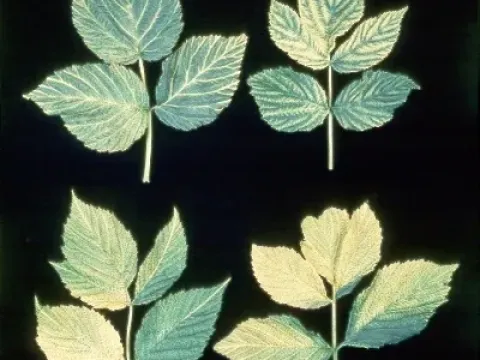
Foliar symptoms include chlorosis, mosaic patterns, and vein yellowing. In many cases, leaves appear deformed, puckered, or asymmetric, which indicates a serious disruption of normal leaf growth.
Fruit quality is severely impacted by the virus. Berries become small, dry, and crumbly, losing their structural integrity and commercial appeal. This is often referred to as "crumbly berry" syndrome in affected raspberry crops.
In pigmented varieties, the virus may cause uneven ripening and partial bleaching of the drupelets. The overall yield is dramatically reduced, and the remaining fruit is often unsuitable for market consumption.
- Stunted growth and reduced cane height
- Mosaic patterns and yellowing of foliage
- Deformed and crumbly fruit structure
- Uneven ripening and loss of fruit quality
The primary driver for the spread of Idaeovirus is the trade and planting of infected nursery stock. If the propagation material is not tested and certified, the virus can easily establish itself in new plantations.
Pollen-mediated transmission is the most critical factor in orchard-level spread. Bees and other pollinators move from infected wild or cultivated plants to healthy ones, introducing the virus during the flowering phase.
Proximity to wild relatives of Rubus species serves as a constant reservoir for the virus. These wild populations act as asymptomatic hosts that keep the virus present in the surrounding landscape.
Climatic factors that encourage high insect pollinator activity during the blooming season inadvertently increase the rate of viral spread. Warmer, dryer conditions can optimize the conditions for pollen transfer.
High-density planting configurations may facilitate the contact between root systems, though pollen remains the primary vector. Nonetheless, the overall health and environmental stress levels of the plants can dictate the speed of symptom onset.
The economic impact of Idaeovirus is substantial, primarily due to the severe reduction in marketable yield. Growers often report yield losses of up to 70% in highly susceptible cultivars.
The quality of the fruit is compromised, as crumbly berries cannot be shipped or processed effectively. This lowers the net income of the farm and may render the business unprofitable.
Infected plants exhibit reduced tolerance to environmental stressors, such as drought, frost, or secondary fungal infections. This often leads to a quicker decline and death of the plantation.
Nursery operations face significant losses if their stock is found to be infected. Certification withdrawal and the destruction of mother blocks represent a direct financial blow to the producer.
The necessity for early replacement of infected plantations demands heavy capital investment, which is often difficult to sustain for medium-sized fruit operations.
The first line of defense is the use of high-quality, virus-free planting stock verified by PCR or ELISA testing. Only certified material should be used to establish new fields.
Maintaining proper spatial isolation from old, infected plantations is crucial. It is highly recommended to clear all wild brambles and unmanaged Rubus species within a 500-meter radius.
Continuous monitoring of the field is essential to identify symptomatic plants. Any infected bushes should be rogued out promptly, removing the root systems to ensure they do not persist as a source of inoculum.
While direct chemical control of the virus is impossible, managing the surrounding vegetation helps limit the presence of wild reservoirs. This integrated approach creates a safer environment for the crop.
The adoption of resistant or tolerant cultivars is the most sustainable long-term solution. Breeding programs have successfully developed varieties that exhibit immunity to Idaeovirus, providing a robust defense against the disease.