
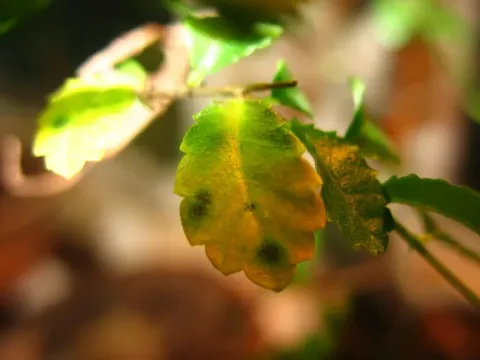
Elm zonate spot
Elm zonate
The causal agent of elm zonate spot is the fungus Didymellina ulmi (also known as Gloeosporium ulmeum). It belongs to the Ascomycota phylum and specifically targets various species within the Ulmus genus.
What the section contains
Elm zonate spot
The life cycle of the pathogen involves the production of conidia within small fruiting bodies called acervuli on the leaf surface. These spores act as the primary inoculants for secondary infections throughout the growing season.
The fungus overwinters primarily in fallen leaves as mycelium or as dormant fruiting structures. In the spring, when temperatures rise and rainfall increases, it produces new spores that infect emerging foliage.
Once it colonizes the leaf tissue, the fungus causes localized necrosis. The mycelium spreads intercellularly, gradually killing the plant cells and absorbing nutrients, which disrupts the tree's photosynthetic capability.
The pathogen is highly host-specific, primarily affecting elm trees. Its ability to complete its cycle repeatedly during the summer makes it a persistent threat in suitable climatic conditions.
The primary symptom is the appearance of distinct spots on the leaf blades. The hallmark of this disease is the zonate or target-like pattern, appearing as alternating light and dark concentric circles within the spot.
The color of the lesions usually transitions from a yellowish-green to a dark, necrotic brown. Over time, tiny black dots develop in the center of the spots, which are the fungal fruiting bodies releasing spores.
Severe infestations lead to widespread chlorosis and premature leaf curling. Infected leaves often become brittle and drop from the tree long before the natural autumn senescence.
Under high humidity, a thin, grayish fungal mass may be visible on the underside of the leaves. This sign indicates that the pathogen is actively sporulating and spreading to adjacent healthy tissues.
- Circular spots appearing on leaves.
- Concentric ring pattern within each spot.
- Black fruiting bodies (acervuli) on necrotic areas.
- Leaf distortion and curling.
- Premature defoliation in late summer.
High humidity and consistent rainfall are the primary environmental drivers for the development of elm zonate spot. Moist periods during the spring allow for rapid germination of spores and infection of young leaves.
Temperatures ranging from 18°C to 24°C are optimal for the growth of Didymellina ulmi. Warm, wet springs create the perfect environment for the fungus to establish its primary infection sites.
Tree density is a critical factor, as overcrowding restricts airflow. Poor air circulation keeps the foliage wet for longer periods, which significantly accelerates the rate of infection and spore transmission.
The presence of leaf litter from the previous season is a major risk factor. Since the fungus survives in debris, cleaning the area around the trees is vital to reduce the local inoculum pressure.
Trees that are weakened by drought, nutrient deficiencies, or poor site conditions are far more susceptible to the disease. Healthy trees can often resist the infection more effectively.
The disease's most significant impact is the reduction of the total photosynthetic surface area. Premature leaf drop stresses the tree and limits its ability to store carbohydrates for winter dormancy.
Reduced vigor makes the tree more prone to secondary stressors, such as frost damage or opportunistic pests. Chronic infection over several years can lead to a noticeable thinning of the canopy.
In nursery settings, zonate spot causes stunted growth and poor aesthetic quality, which may render the saplings unsaleable or unsuitable for landscape planting.
In urban landscapes, the premature loss of foliage detracts from the aesthetic value of elm trees, forcing arborists to intervene with chemical or cultural controls to maintain the trees' appearance.
Long-term infestation can leave the tree vulnerable to secondary wood-boring insects. As the tree's overall defense mechanisms decline, the cumulative damage can lead to the decline of the specimen.
The most effective cultural practice is the thorough collection and disposal of all fallen leaves at the end of the season. Eliminating these reservoirs is key to breaking the disease cycle.
Pruning to increase canopy openness is recommended to improve air circulation and allow leaves to dry faster after rain. Removing infected branches can also reduce the overall pathogen load.
When the infection pressure is high, fungicides containing copper or other systemic active ingredients can be applied. Early application, beginning at bud break, provides the best protection.
Maintaining proper tree health through appropriate fertilization and regular watering helps the tree resist fungal colonization. Avoid over-fertilizing with nitrogen, which can lead to succulent growth susceptible to infections.
Monitor the trees regularly during the growing season. If symptoms appear, prompt action with targeted fungicide treatments and rigorous sanitation can contain the spread of the pathogen.