
Emaravirus
Emaravirus
Emaravirus is a genus of plant-infecting viruses characterized by a segmented, single-stranded RNA genome that causes significant systemic disease in various botanical hosts.
What the section contains
Emaravirus
As obligate parasites, these viruses rely entirely on the machinery of the host plant cell to replicate their genetic material and synthesize necessary viral proteins.
The biological cycle of Emaravirus is uniquely adapted to its vector, specifically eriophyid mites, which facilitate the horizontal transmission of the virus from infected to healthy plants.
Once inside the plant tissue, the virus often resides in the cytoplasm, creating specialized inclusion bodies that protect its components and assist in the systemic invasion of the host.
Due to its complex genomic structure, Emaravirus has evolved sophisticated mechanisms to bypass host immune responses, making it a persistent and challenging pathogen to eradicate once established.
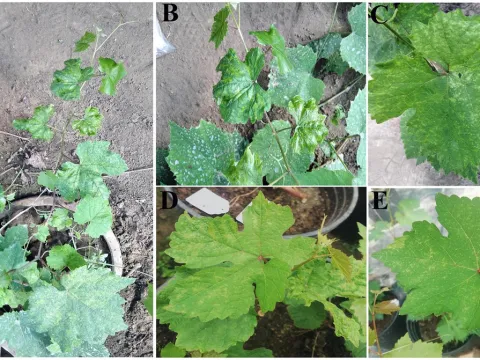
Clinical signs of Emaravirus infection frequently manifest as chlorotic mottling, mosaic patterns, and variegated leaves, which are often mistakenly diagnosed as nutrient deficiencies.
Affected plants frequently exhibit distorted leaves, stunted growth, and in some species, a distinct rolling of the leaf margins that significantly impairs normal development.
In various perennial crops, the infection can induce abnormal proliferation of shoots, commonly referred to as "witches' brooms," resulting from the viral disruption of host hormonal signaling.
Systemic symptoms typically include reduced vigor, premature leaf drop, and overall physiological decline, which directly correlate with the viral load in the plant's vascular system.
The progression of the disease is often slow, with an incubation period that allows the virus to colonize the plant extensively before obvious outward symptoms appear to the grower.
The proliferation of Emaravirus is inherently linked to the presence and density of eriophyid mite populations, which serve as the primary biological vectors for the disease.
Optimal conditions for disease outbreaks include warm and stable weather patterns that support the rapid breeding and migration of these microscopic mite vectors across plantations.
The existence of reservoir hosts, such as wild vegetation or neglected nearby orchards, provides a continuous source of inoculum that can infect commercial crops annually.
The transmission is also heavily facilitated by human intervention, particularly through the propagation of infected nursery stock, scions, or cuttings taken from virus-carrying mother plants.
Dense planting configurations and poor canopy management exacerbate the spread by creating a favorable, humid microclimate that favors mite survival and rapid virus transmission.
Emaravirus causes severe economic damage by reducing overall yield quality and quantity, as infected plants become unable to allocate resources efficiently to fruit production.
Chronic infection leads to the progressive debilitation of the crop, forcing growers to prematurely replace entire blocks of orchards or fields, which incurs substantial financial costs.
Fruit harvested from diseased plants often displays reduced marketability due to size reduction, physical deformities, and impaired post-harvest shelf life, directly affecting profitability.
The persistence of the virus within the plant tissues makes curative treatments virtually non-existent, leaving only mitigation and prophylactic strategies as viable options.
International trade can be hindered by the presence of these viruses, as quarantine regulations are enforced to prevent the cross-border spread of infected propagation material.
The most reliable control measure is the use of high-quality, virus-indexed nursery material that has been verified to be free from Emaravirus via advanced molecular testing.
Effective management requires rigorous control of mite vector populations using specific acaricides, timed in accordance with the mite's life cycle and local agricultural monitoring data.
Sanitation practices, including the aggressive roguing of symptomatic plants and the destruction of infected residues, are essential to minimize the inoculum pressure in the environment.
Tool disinfection is mandatory when pruning or performing routine maintenance to prevent the mechanical transmission of viral particles through contaminated sap.
- Establishment of buffer zones around commercial orchards.
- Integrated pest management (IPM) to control mite vectors.
- Regular screening of mother blocks for early detection.
- Promotion of resistant cultivars if available for the specific crop.