
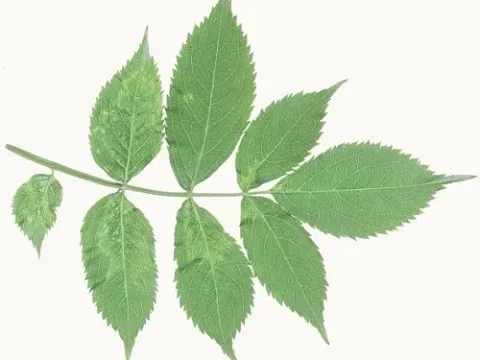
Elderberry symptomless virus
Elderberry symptomless
The causal agent is the Elderberry symptomless virus (EBSLV), a member of the Carlavirus genus. It consists of flexible, filamentous particles containing single-stranded RNA.
What the section contains
Elderberry symptomless virus
This virus specifically infects the phloem tissues of Sambucus species. Being a latent pathogen, it maintains a long-term symbiotic-like relationship with the host without inducing acute disease symptoms.
Transmission primarily occurs through the trade and distribution of infected nursery stock, which is the main factor in the global spread of the virus across different regions.
Mechanical transmission is also possible during pruning or grafting activities. If pruning tools are contaminated with plant sap from an infected shrub, they can easily transfer the virus to healthy plants.
As a Carlavirus, EBSLV is genetically adapted to bypass the host's primary immune responses, allowing it to remain systemic and persistent within the plant for its entire life cycle.
As the name suggests, the virus is asymptomatic. Infected elderberry plants show no characteristic chlorosis, leaf curling, or mosaic patterns typically associated with viral infections.
The plant growth, flower development, and fruit production often appear completely normal to the naked eye, making field scouting useless for the identification of this pathogen.
Due to the lack of visible symptoms, detection is only possible through highly sensitive molecular diagnostic techniques such as RT-PCR or ELISA testing.
Under specific stress conditions, some cultivars might show reduced vigor, but this is rarely attributed to the virus without laboratory confirmation, as environmental factors often mask the effect.
Because the disease is latent, the greatest challenge is that the most vigorous and productive-looking plants might be carriers of the virus, fueling its undetected spread in plantations.
The primary condition for spreading EBSLV is the human factor. Using infected propagation material (cuttings or grafts) is the most significant vector for introducing the virus into a new site.
Insect vectors, specifically aphids, are known to transmit many Carlaviruses. While their role in EBSLV specifically is a subject of study, they remain a significant potential threat to plantation health.
Warm and moist weather conditions during the active growth phase can increase the activity of insect vectors, thereby indirectly facilitating the movement of the virus between neighboring plants.
High moisture and sap flow facilitate the movement of viral particles during pruning, particularly when workers operate in large nurseries without proper hygiene standards between rows.
The virus thrives when the host plant is in an active metabolic state, allowing for efficient systemic distribution throughout the conductive vascular tissues from roots to shoots.
The primary damage is the hidden economic risk. Growers may invest heavily in plantations that are already infected, leading to long-term issues with vigor and potentially lower-quality harvests.
Infection acts as a silent drain on the plant's resources. While not fatal, it can make the elderberry more susceptible to secondary stressors, such as drought, pests, or bacterial infections.
The virus can have synergistic effects with other latent pathogens, leading to a decline in plant health that is often misdiagnosed as nutrient deficiency or poor soil conditions.
Export restrictions are a significant concern. Many countries have strict phytosanitary regulations that prohibit the import of plant material carrying unknown or specific viral pathogens like EBSLV.
For the nursery industry, the presence of asymptomatic viruses can lead to a total loss of certification, damaging the reputation of the grower and resulting in significant financial losses.
The cornerstone of management is strict biosecurity. Growers must exclusively source virus-indexed propagation material from certified laboratories to ensure the foundation stock is clean.
Sanitation practices are essential. All tools used for pruning and grafting must be thoroughly disinfected with appropriate agents between every single plant to prevent mechanical transmission.
Implement an integrated pest management (IPM) program to control aphid populations and other potential sucking insects that may act as vectors for the virus.
Regular laboratory monitoring is recommended for mother blocks and elite nursery stock. Testing for latent viruses should be a mandatory step in the quality control process of any professional nursery.
If an infected plant is identified through molecular testing, it should be immediately rogue-out and destroyed to prevent the virus from becoming a permanent reservoir in the plantation.