
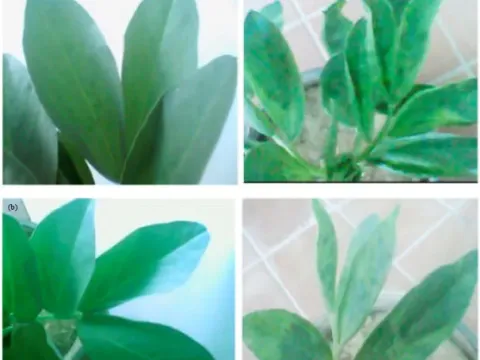
Vicia mosaic virus
Comovirus viciae
The causal agent of this disease is the Comovirus viciae, a member of the Comoviridae family. This phytopathogenic virus primarily infects various species within the legume family.
What the section contains
Vicia mosaic virus
The virus particle consists of an isometric capsid containing a single-stranded RNA genome. The disease is transmitted in agroecosystems either mechanically or through specific insect vectors.
Perennial leguminous weeds often serve as natural reservoirs for the virus, allowing it to survive during the winter months. In spring, the pathogen spreads to emerging crop seedlings.
The infection process occurs when viral particles enter the plant tissue through minor abrasions or wounds. Once inside, the virus utilizes the plant's resources for systemic replication.
Systemic movement throughout the plant disrupts metabolic processes, particularly chlorophyll synthesis, leading to the characteristic yellowing and loss of photosynthetic efficiency.
The initial symptoms appear on young leaves as a characteristic mosaic pattern. The foliage exhibits mottled patches of light green and dark green, significantly changing the leaf's appearance.
As the disease progresses, leaf deformation, curling, or curling of the margins may occur. Infected plants typically exhibit stunted growth compared to healthy plants in the same field.
During the flowering stage, affected plants may show reduced bud formation or premature flower drop. Pods are often underdeveloped, with stunted seeds that have poor germination potential.
Severe infections may lead to chlorotic rings or necrotic spots on the leaf blades. The overall vigor of the plant declines, giving it a chlorotic and unhealthy appearance.
Visual identification can be difficult due to symptoms mimicking other viral or nutritional disorders. Serological tests or molecular methods are often required for definitive diagnosis.
The rapid spread of Vicia mosaic virus is largely dependent on the population dynamics of insect vectors, particularly aphids. High aphid activity during the early growth stages increases infection rates.
Warm and humid weather conditions favor the reproduction of insect vectors, leading to higher disease pressure. Such conditions create an environment conducive to secondary infection cycles.
The presence of leguminous weeds in the vicinity of fields provides an early season source of inoculum. Higher weed density near the field edges correlates with increased disease incidence.
Mechanical damage during routine field maintenance, such as cultivation or weeding, facilitates the transmission of the virus. Moist foliage makes it easier for the virus to move between plants.
Over-fertilization with nitrogen can lead to succulent growth, making the crop more susceptible to aphid infestations, which in turn elevates the risk of viral transmission.
The primary economic harm is the substantial reduction in yield, both in terms of biomass and seed production. The metabolic drain on the plant limits its ability to accumulate nutrients.
Infection interferes with the symbiosis between the plant and nitrogen-fixing bacteria in the root nodules. This limits the plant's access to natural nitrogen sources and reduces soil fertility benefits.
Infected plants display lower tolerance to environmental stress, including drought or cold. This weakens the overall stand, leading to increased plant mortality and reduced harvest density.
Seed quality is significantly compromised, rendering the produce unsuitable for future sowing. Seed transmission is a critical risk factor that can persist across multiple seasons.
Financial losses occur due to decreased output and the necessary investments in insecticide applications to manage insect vectors throughout the growth cycle.
The foundation of control lies in using certified, virus-free seed material. Ensuring that sowing stock originates from areas free of viral history is a critical preventative measure.
Managing insect vector populations, such as aphids, using targeted insecticides during peak activity periods, is essential to limiting the secondary spread of the virus.
Rigorous weed control, particularly of leguminous weeds in and around the field, eliminates natural reservoirs of the virus and reduces the primary source of infection.
Implementing effective crop rotation strategies, where legumes are not planted in the same field for several years, helps reduce the soil-borne and residue-based infection risk.
The adoption of resistant or tolerant cultivars is the most sustainable long-term strategy for mitigating the impact of Vicia mosaic virus in professional farming.