
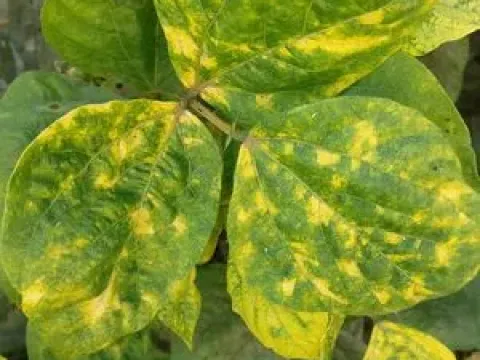
Vigna mosaic
Begomovirus vignamusivi
The causal agent of this disease is a virus from the Begomovirus genus, characterized by a circular single-stranded DNA genome. It belongs to the Geminiviridae family, which is well-known for causing significant crop losses globally.
What the section contains
Vigna mosaic
This virus primarily infects various legumes, including Vigna species (cowpeas), beans, and soybeans. It acts as a systemic pathogen, invading the vascular system and disrupting plant homeostasis.
The transmission is primarily carried out by whiteflies, particularly Bemisia tabaci. The virus is acquired by the vector during feeding and is subsequently transmitted to healthy plants.
Once injected into the plant tissue, the virus replicates in the nuclei of host cells. It then moves through the phloem to infect new, developing leaves and systemic tissues.
Due to the virus's ability to remain in the insect vector for an extended period, disease outbreaks can occur rapidly, making early detection and vector management essential.
The most prominent sign is the mosaic pattern on the foliage, characterized by patches of light green, yellow, and dark green discoloration across the leaf blade.
Leaves often exhibit severe deformation, including curling, puckering, and crinkling. The size of the leaf lamina is typically reduced, giving the plant a stunted, irregular appearance.
Stunting of the entire plant is a common systemic effect. Infected plants show significantly shorter internodes, which results in a bushy, deformed habit compared to healthy neighbors.
Reproductive success is severely hampered. Infected plants show reduced flower production and premature flower shedding, leading to a substantial decrease in the number of pods produced.
Pods that do develop are often misshapen, discolored, and necrotic. The seeds within the pods may be shriveled, exhibit mottled patterns, or have reduced viability due to the systemic infection.
The development of the disease is highly correlated with warm, tropical, or subtropical environments that favor the life cycle of the whitefly vector.
Dry and hot periods promote the movement of whiteflies from weeds or wild hosts into legume fields, facilitating the spread of the virus across the crop.
Poor agricultural practices, such as high-density planting and inadequate field sanitation, create a microclimate that supports vector population growth and easier disease transmission.
The presence of weeds in or around the field that serve as alternative viral reservoirs is a critical factor for the initial introduction of the virus into the crop.
Using seeds collected from previously infected plants or introducing virus-infected seedlings into a clean area can spark an epidemic within a single growing season.
Vigna mosaic causes severe economic loss by reducing crop yields, sometimes by over 50%. The cumulative effect of stunted growth and poor pod development leads to significantly lower harvest weights.
The marketability of the crop is severely compromised. Discolored, deformed, and small pods are generally unacceptable for the fresh market or food processing industries.
Seed quality is drastically reduced, affecting the vigor and germination rate of the future crop. This leads to uneven stands and decreased yield potential in subsequent plantings.
The infection leaves the plants immunocompromised, making them more susceptible to secondary opportunistic infections by fungi and bacteria that further weaken the tissue.
Early leaf senescence disrupts the photosynthetic capacity of the plant, preventing the accumulation of necessary nutrients and proteins in the developing grain.
Management focuses on vector control. Applying systemic insecticides early in the season is necessary to keep whitefly populations below the economic injury threshold.
Utilizing certified, disease-free seed stocks is a fundamental preventative measure. Growers should avoid saving seeds from fields that showed any signs of viral symptoms.
Implementing crop rotation and maintaining rigorous field sanitation by removing weeds that act as alternative hosts are highly effective strategies to prevent viral spread.
Rouging is a critical field practice: identify and destroy symptomatic plants early to reduce the viral inoculum available for insect vectors to pick up and spread.
Whenever possible, select and plant resistant or tolerant cultivars, which is the most sustainable long-term solution for managing viral diseases in commercial production.